
If you want to offer your children a unique experience, full of fun and creativity, a home theater performance is the perfect activity! Not only will they have a great time, but they will also develop valuable skills! Let’s look at how you can organize such a performance, with the children as the stars!
Choosing the theme and the script
First, talk to the children about the theme they would like their performance to be based on. It could be a well-known fairy tale or fable, such as “Little Red Riding Hood” or “The Three Little Pigs,” or something completely original that you all come up with together. Encourage children to express their ideas and suggest their own stories or characters. Involving them in choosing the theme will help them feel more connected to the performance and provide an opportunity to develop their imagination and creativity. Once the theme is chosen, they can move on to creating the script—either by writing it together or by letting the children improvise during the performance.
Assigning roles and responsibilities
Every theatrical performance requires actors, but it also involves other roles, such as director, costume designer, set designer, and musician. Let the children choose the roles that interest them most. If a child feels comfortable in front of an audience, they might choose a lead role. On the other hand, if someone prefers to work behind the scenes, they could take on directing, creating costumes, or designing the set.
This division of responsibilities helps children discover their own inclinations and interests, while also strengthening team spirit. Each child makes a unique contribution to the performance, giving them the sense that they all play an important part in its ultimate success.
Creating the set and costumes
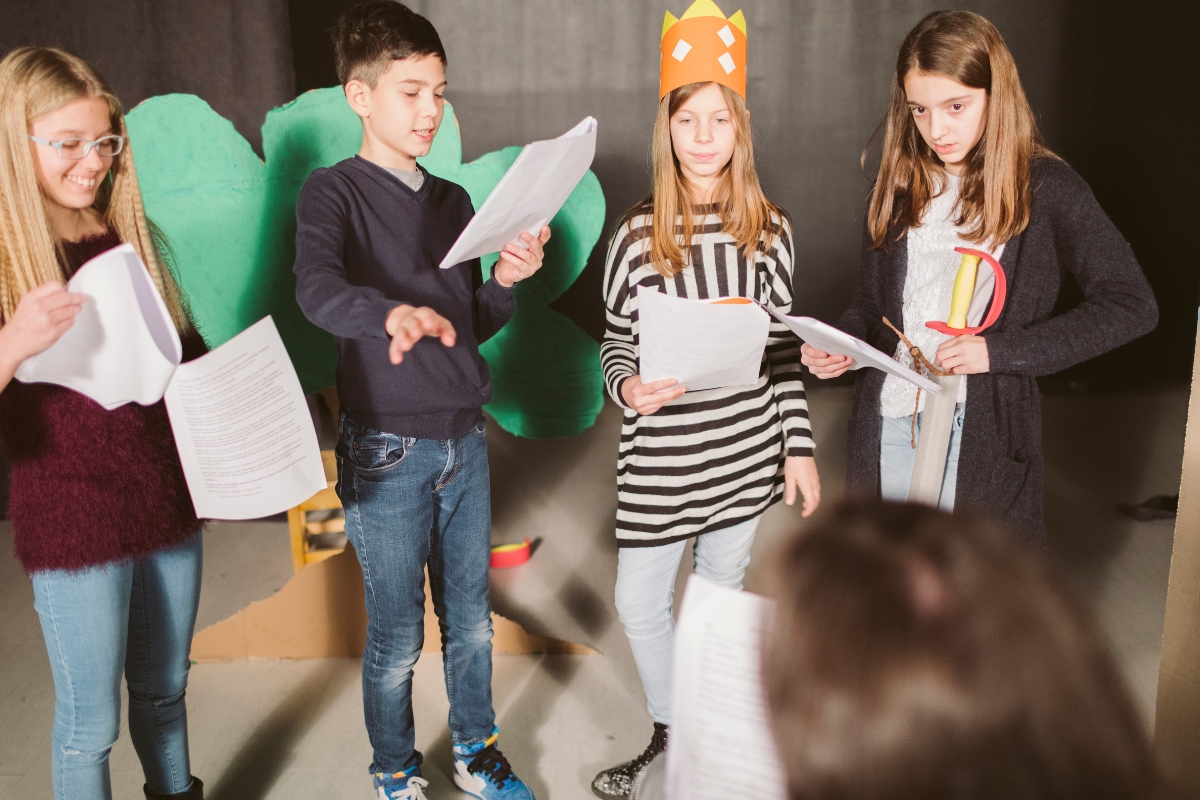
This is where children can truly let their imaginations run wild! They can use simple materials found around the house, such as cardboard, paints, old fabric, or even toys. For example, a large piece of cardboard can serve as a backdrop, while an old bedsheet can be used as a curtain. You can make trees, houses, or castles out of boxes and paint them with the children. If the play’s theme is a fairy tale, try to create scenes that transport the audience into the imaginary world you are building.
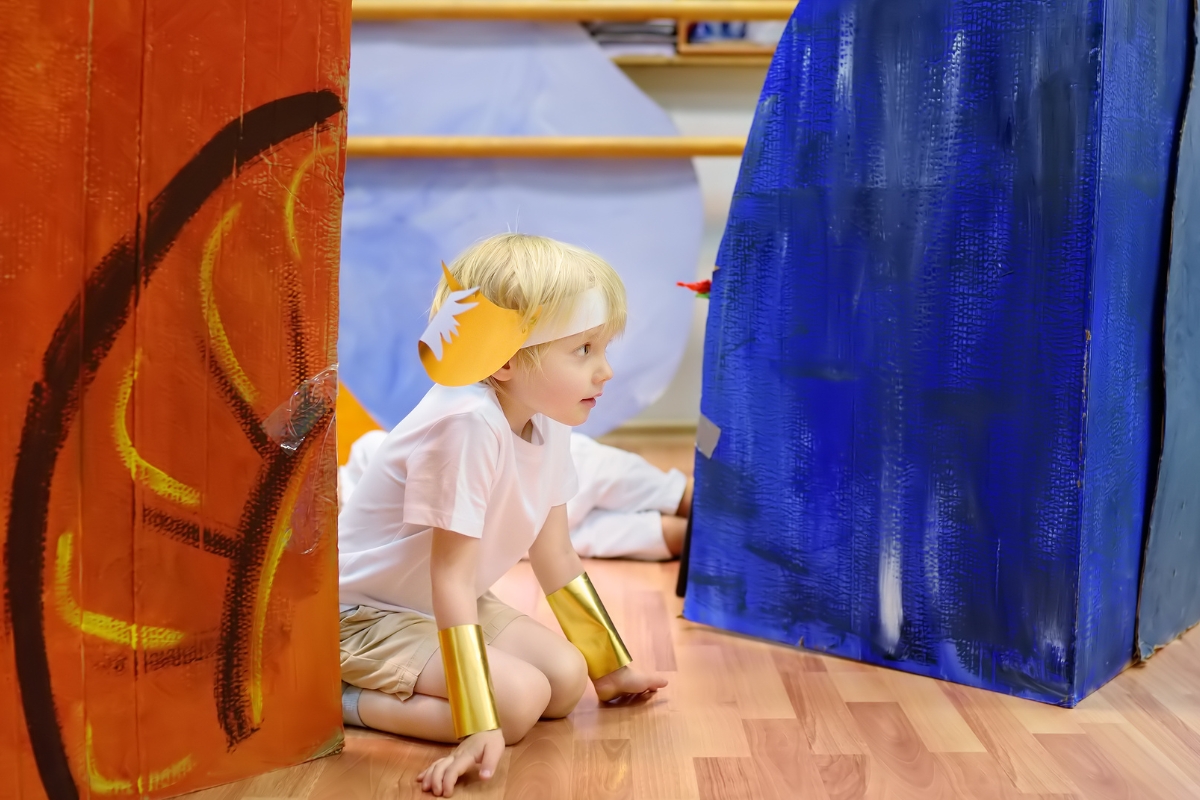
For costumes, you can use old clothes, accessories, and fabrics that you already have at home. An old hat can become a royal crown, and a piece of fabric can be transformed into a cape or a dress. Let the children experiment with the clothing and create their own characters. You can also use makeup to add the finishing touch to their roles.
Through this process, children will learn to collaborate and make creative use of the materials at their disposal. At the same time, it gives them the chance to see how simple objects can be transformed into something magical through imagination and collaboration.
Prepare some background music
Music can add magic and excitement to an improvised theatrical performance, making it thrilling for both the audience and the young actors. For cheerful scenes, choose music with a lively rhythm, such as children’s songs or pleasant instrumental pieces; for dramatic scenes, use music with a slower tempo or pieces that are deep and dramatic.
If a child plays a musical instrument, this is the perfect opportunity to showcase their talent and add a unique touch to the performance! Task the child who plays an instrument with creating live background music. This can be done by playing during specific scenes or by providing accompaniment for the characters’ entrances and exits.
Rehearsals, rehearsals, rehearsals!
Rehearsals are essential to ensure everything goes smoothly on the day of the performance. However, don’t forget that the goal is to have fun! Rehearsals don’t have to be rigorous; rather, they should be an opportunity for the children to become familiar with their roles and feel comfortable on stage.
First, read through the script together and discuss it. This will help the children understand the story and their roles. Then, you can begin acting out the scenes, allowing the children to explore their characters and improvise. If a child forgets their lines, encourage them to continue with confidence, adding their own personal touch to the role.
During rehearsals, allow the children to experiment with different ways of interpreting their roles. They can try out different voices, movements, or expressions for their characters. This freedom will help them feel more at ease and discover what works best for them.
The big day of the performance
On the day of the performance, you can invite family or friends to watch. Why not print your own invitations? Share them with friends and family and invite them to the big premiere! Be sure to create a pleasant atmosphere—perhaps with some refreshments and a small “stage” where the performance will take place. Having an audience will give the children a sense of having accomplished something truly significant!
The day of the big performance is an experience children will remember forever. It is the culmination of their efforts and a confirmation that they can achieve great things when they work together and express their creativity.
What do children gain from this activity?
- Development of creativity: From writing the script to creating the set, children learn to express their ideas and think creatively.
- Development of self-confidence: Participating in a performance and taking on a role in front of an audience helps children overcome shyness and believe in themselves.
- Collaboration and team spirit: By working together to put on the performance, children learn to cooperate, listen, and respect the opinions of others.
- Communication skills: Theater improves children’s verbal skills, as they learn to express themselves with greater clarity and confidence.
- Development of critical thinking: When faced with challenges—such as conveying a message through their character—children learn to think critically and find solutions.
By organizing a children’s theater performance at home, you give your children the opportunity to discover new facets of themselves, have fun, and learn through play. After all, the joy of creating and the reward of participating are invaluable experiences that will stay with you forever.
Your first step in Spain
Look for a beginner-level activity near home and discuss your experience level before booking. Confirm details regarding equipment, requirements, insurance, and the policy for bad weather. For outdoor activities, check the specific advisories and restrictions for the location—conditions vary significantly between the coast, the interior, and the islands. Choose an activity based on your own preparation and the guidance of professionals, rather than relying solely on a photograph or a difficulty label.
Original article: 2024-08-26. Edition adapted for Spain: 27 October 2026. Read the Greek original. Original author: Eleni Agiou.