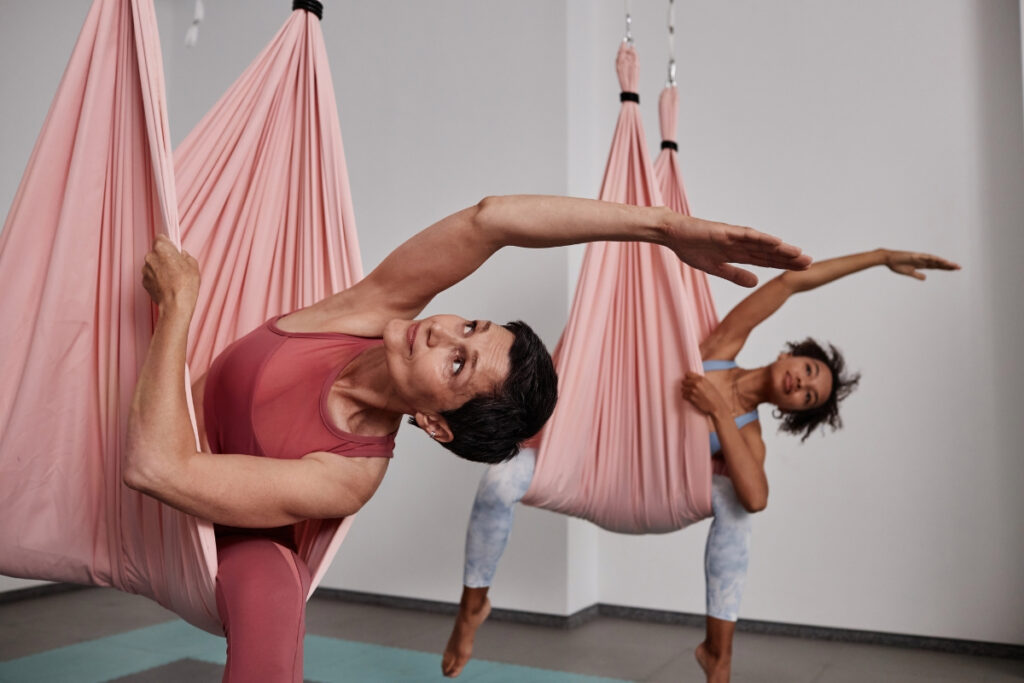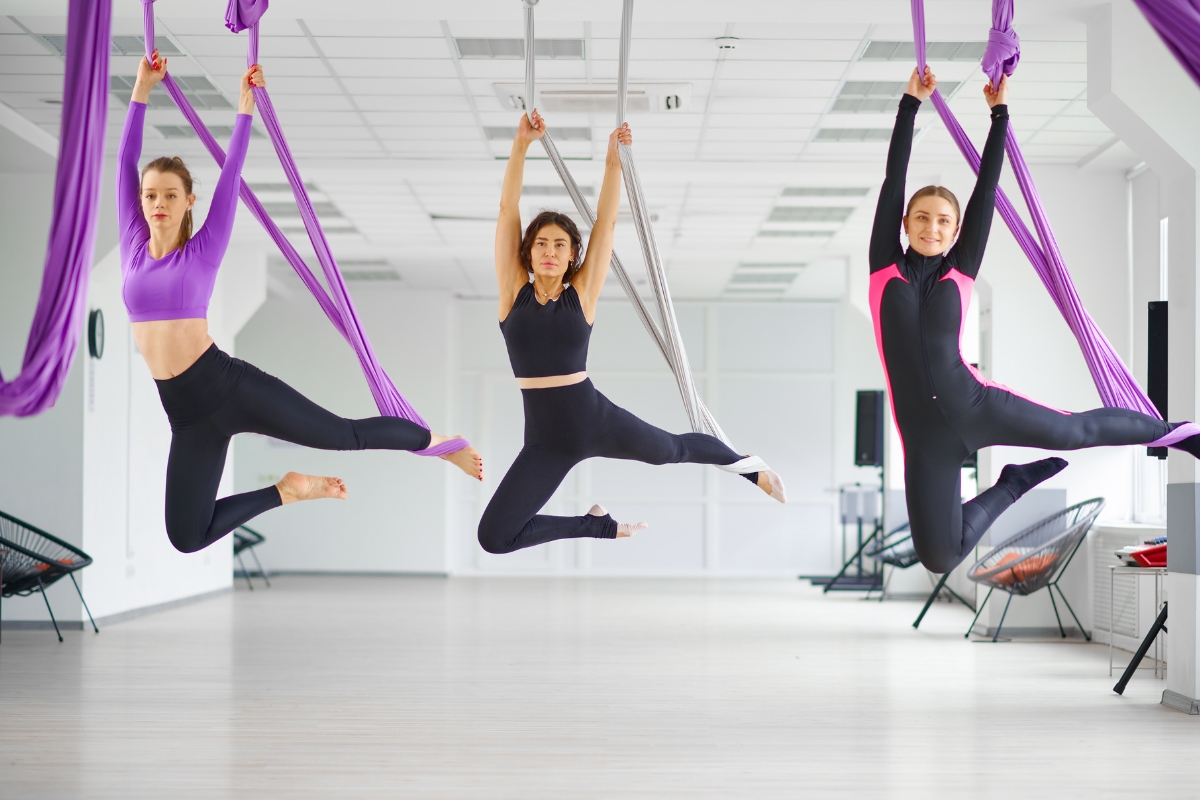
Have you heard of goat yoga? It certainly makes for impressive Instagram photos, but there is something even more magical: aerial yoga. Imagine floating in the air, wrapped in silky fabrics, like a butterfly emerging from its chrysalis. That is the aerial yoga experience!
Beyond the fun and striking acrobatic movements, aerial yoga offers many physical and mental benefits. It is also becoming increasingly popular as an accessible, therapeutic form of yoga.
What exactly is aerial yoga?
Aerial yoga combines traditional yoga poses (asanas) and yoga philosophy with aerial arts. It uses fabrics or ropes suspended from the ceiling to help practitioners achieve various poses.
During a session, you can:
- Support your entire body with the fabrics—even lying down as if in a hammock.
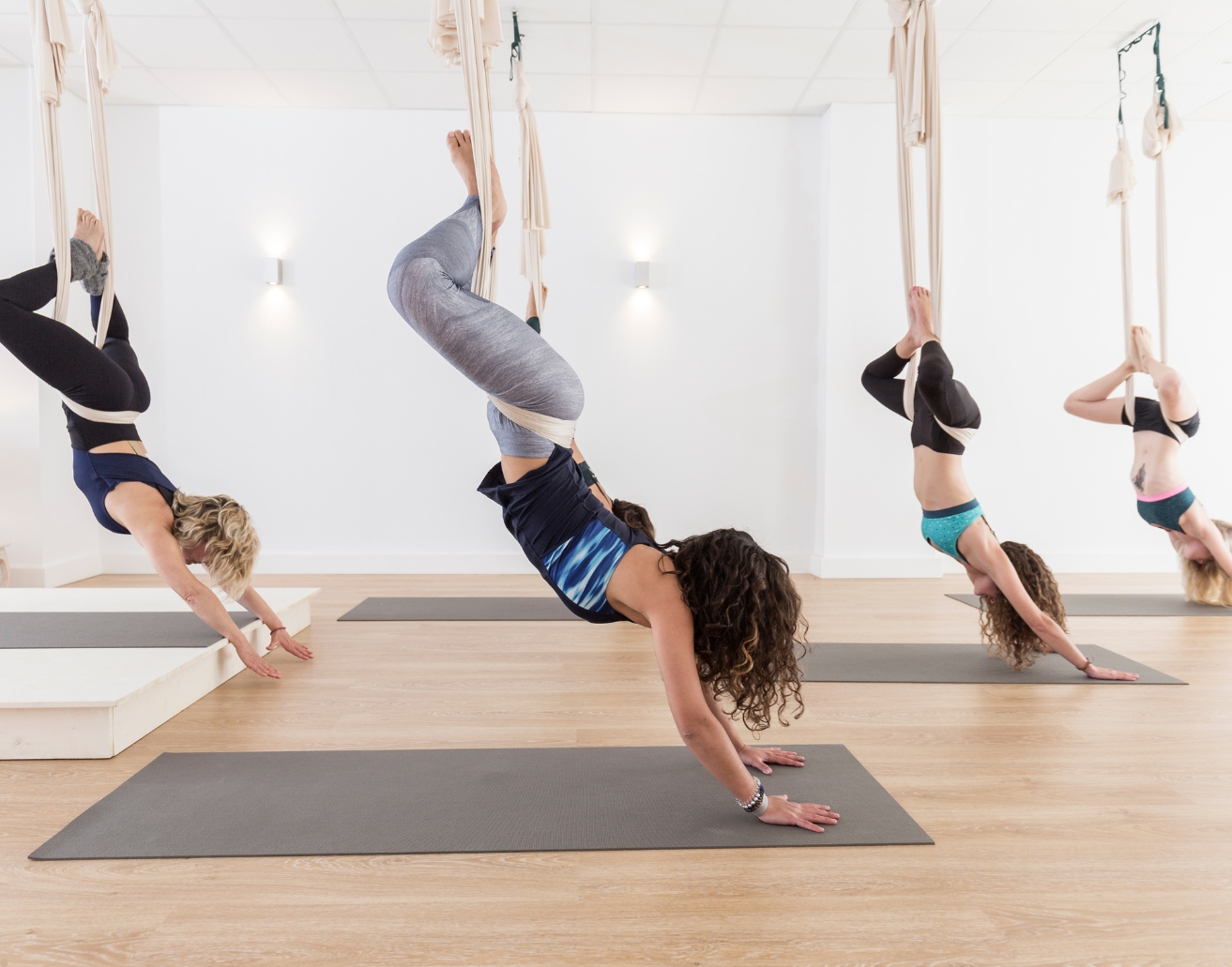
- Wrap the fabrics around specific parts of your body, while other parts remain on the floor.
It is believed that hanging or suspending parts of the body creates traction, opening the body in a gentler, more natural way compared to floor-based exercises. Additionally, the fabrics and ropes help improve balance.
While many aerial yoga classes incorporate acrobatic elements, there is a growing trend toward more therapeutic approaches. Many instructors use aerial fabrics with a focus on healing and rehabilitation.
History of Aerial Yoga
The use of props in yoga was primarily championed by B.K.S. Iyengar (1918–2014), the creator of Iyengar yoga. In addition to the standard props—such as blocks, straps, and blankets—found in many studios, Iyengar experimented with suspending his students from the ceiling using special swings (yoga swings).
Originally, these swings were simply ropes covered with yoga mats or blankets—a far cry from the colorful silk hammocks we see today!
This practice, initially called “anti-gravity yoga,” began to gain popularity in the late 1990s. The first official “yoga swing”—a system of silk harnesses featuring handles and foot loops—was created in the United Kingdom in 2001.
The modern form of aerial yoga, which utilizes a large piece of fabric (a yoga hammock), emerged around 2011. Its popularity has since skyrocketed, and today, aerial yoga studios and qualified instructors can be found all over the world.
Benefits of Aerial Yoga
Aerial yoga blends art with exercise, offering a range of physical and psychological benefits:
- Enhanced flexibility, stability, and balance: A 2019 study revealed that aerialists possess exceptional flexibility, balance, and strength.
- Joint decompression: Inverted poses and inversions help decompress the joints, which often become compressed due to gravity and the aging process.
- Cardiovascular health: A 2016 study by the American Council on Exercise (ACE) demonstrated a significant reduction in risk factors for cardiovascular disease.
- Light-to-moderate intensity exercise: The same study found that a 50-minute aerial yoga session can burn over 300 calories.
- Improving mental health: A small study found significant reductions in depression and stress among people who practiced aerial arts. Aerial yoga, which combines yoga philosophy with movement, can be especially beneficial in this regard.
Important warning
Before you begin practicing aerial yoga, it is important to know that it is not suitable for everyone. Specifically:
- It is not recommended for pregnant women.
- People with certain eye conditions (e.g., cataracts or retinal detachment) should avoid exercises that involve hanging upside down.
- Those with uncontrolled blood pressure should also exercise caution.
It is always advisable to consult with your doctor before starting any new exercise program, especially one as unique as aerial yoga.
How to get started
- Find a class near you:
- Search for “aerial yoga” in your area on HobbyDetective.
- Ask at local yoga studios if they offer aerial yoga classes or if they know of any instructors. Many studios offer trial classes or workshops specifically for beginners.
- What to expect in your first class:
- Get ready to laugh a lot and perhaps be a little surprised!
- No prior yoga experience is required.
- Even if you have experience with other types of yoga, start with a beginner-level class.
- Don’t worry if you feel a bit dizzy—especially after exercises where you are hanging upside down; this is normal for beginners.
- Tips for beginners:
- Listen to your body. If something doesn’t feel right, take a break or ask for help.
- Reach out to your instructor. If something feels uncomfortable or painful, ask for assistance.
- Start gradually. You will gain experience over time.
- Trust the equipment, trust your instructor, but above all, trust yourself.
- Have fun! You might get a little confused or tangled up at first, but that’s all part of the process.
Aerial yoga is a unique and exciting form of exercise that combines the benefits of traditional yoga with the freedom of movement in the air. With therapeutic and restorative variations available, it is accessible to a wide range of people—not just those with acrobatic skills. Why not give it a try? You might just discover your new favorite activity!
Your first step in Spain
Look for options close to home: check the schedules provided by your local town hall, libraries, community associations, or specialized centers. Before signing up, confirm the language, skill level, requirements, accessibility, and total cost. Availability varies by municipality and season; this guide offers suggestions, not bookings or recommendations for any specific provider.
Original article: 2024-10-04. Edition adapted for Spain: 27 October 2026. Read the Greek original. Original author: Eleni Agiou.