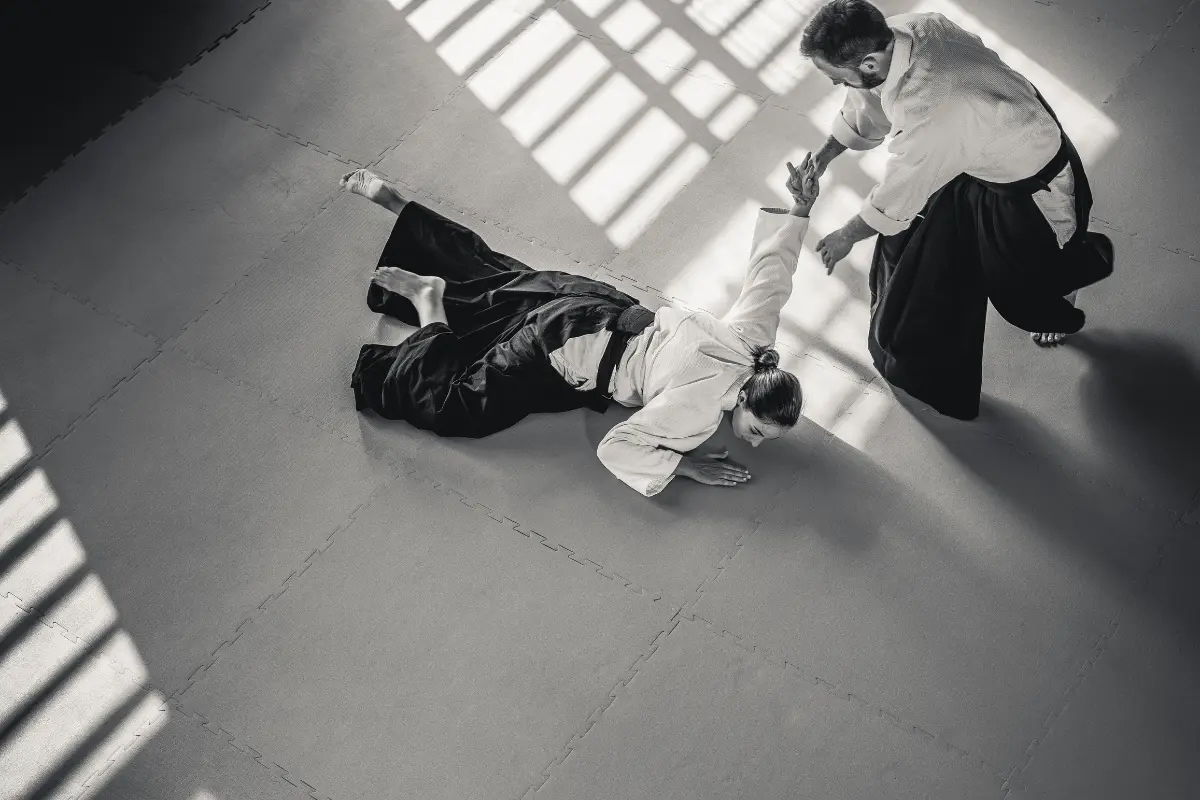
Aikido, a Japanese martial art founded by Morihei Ueshiba in the early 20th century, has evolved into a multifaceted practice that extends well beyond simple self-defense. Known as “the path of harmony with the energy of the universe,” Aikido integrates philosophical, spiritual, and physical aspects, offering its practitioners a holistic path for personal development.
Since its inception, Aikido has branched out into numerous styles, each with its own interpretation of and emphasis on the founder’s teachings. This diversity reflects not only the rich heritage of the art but also its adaptability to different philosophies, cultures, and practical needs.
In this introduction, we will explore more than 15 different styles of Aikido, ranging from the traditional Aikikai to more modern approaches such as Aikido Real. Each style offers a unique perspective on the principles of Aikido:
- Some, such as Aikikai and Iwama Ryu, remain faithful to Ueshiba’s original teachings, emphasizing the spiritual and philosophical aspects of the art.
- Others, such as Yoshinkan and Shodokan, have adopted more structured and athletic approaches, even incorporating elements of combat.
- Styles like Ki Aikido and Shin’ei Taido focus on the development and use of “Ki/Qi” (vital energy), connecting Aikido to deeper spiritual practices.
- More modern approaches, such as Aikido Real and Aikido Tenshin, adapt techniques for more practical applications in modern self-defense.
Despite their differences, all Aikido styles share common fundamental principles: harmony with the opponent, the use of circular and spiral movements, and the cultivation of a peaceful spirit through the practice of a martial art.
As we explore each style, we will examine its unique characteristics, the philosophy that governs it, the techniques it employs, and its global presence. Whether you are an experienced Aikido practitioner or simply curious about this multifaceted art, this overview offers a deeper understanding of the rich diversity that exists within the world of Aikido.
Aikikai:
- Founder: Kisshomaru Ueshiba (son of Morihei Ueshiba)
- Characteristics: Considered the most traditional style of Aikido.
- Techniques: Emphasis on fluid, circular movements and gentle techniques.
- Philosophy: Focuses on harmony and the peaceful resolution of conflict. Promotes non-violence and personal development through practice.
- Competition: Does not have an official competitive system. Training is conducted through cooperative practice and demonstrations.
- Training: Includes techniques both with and without weapons (bokken, jo, tanto). Emphasis is placed on the development of *ki* and correct posture.
- International Presence: It is the most widespread style globally, with a strong presence on every continent. It is particularly popular in Japan, the United States, Europe, and Latin America.
Yoshinkan Aikido:
- Founder: Gozo Shioda
- Characteristics: Known as “hard” Aikido.
- Techniques: Emphasis on dynamic, linear movements and fixed stances.
- Philosophy: A practical approach to self-defense. It focuses on developing strength and effectiveness in techniques.
- Competition: Does not have a formal competitive system, but involves intense training and practical testing.
- Training: A structured learning system, frequently used in police academies. Includes intensive physical training.
- International Presence: Strong presence in Japan, the United States, Canada, Australia, and parts of Europe. Particularly popular in countries with an interest in practical self-defense.
Shodokan Aikido:
- Founder: Kenji Tomiki
- Characteristics: The only style with an official competitive component.
- Techniques: Combines Aikido techniques with Judo principles.
- Philosophy: Promotes the athletic aspect of Aikido. It holds that competition helps develop real-world skills.
- Competition: Features official competitions with rules and a scoring system. Includes two types of competition: *randori* (free practice) and *kata* (predetermined forms).
- Training: Includes *randori* and *kata* exercises, as well as preparation for competitions.
- International Presence: Has a significant presence in Japan, the United Kingdom, Spain, Switzerland, the United States, and Australia. International tournaments are organized.
Tomiki Aikido:
- Founder: Kenji Tomiki (originally the same as Shodokan, but developed separately)
- Characteristics: Similar to Shodokan, but with different emphases
- Techniques: A combination of Aikido and Judo techniques
- Philosophy: Focuses on practical application and athletic development. Believes in the importance of competition for personal growth.
- Competition: Features a competitive system similar to that of Shodokan, though with some differences in rules and emphasis.
- Training: Includes competitive exercises, kata, and preparation for competitions.
- International Presence: Present in many countries, though less widespread than Shodokan. Strong presence in Japan and parts of Europe.
Iwama Ryu Aikido:
- Founder: Morihiro Saito
- Characteristics: Emphasizes the use of weapons alongside unarmed combat techniques.
- Techniques: A close relationship between unarmed combat techniques and weapons-based techniques.
- Philosophy: Focused on preserving the original teachings of Morihei Ueshiba. Emphasizes tradition and precision in the execution of techniques.
- Competitive Aspect: Does not feature a formal competitive system. Training is conducted through cooperative practice and demonstrations.
- Training: Intensive training with *bokken* (wooden sword) and *jo* (wooden staff), alongside unarmed combat techniques.
- International Presence: Has a significant presence in Japan, the United States, Europe, and Latin America. Particularly popular in countries with an interest in traditional martial arts.
Ki Aikido:
- Founder: Koichi Tohei
- Characteristics: Emphasis on the development and use of “ki” (vital energy)
- Techniques: Smooth, fluid movements with an emphasis on mind-body coordination
- Philosophy: Integrates the concept of “ki” into daily life. It holds that developing “ki” can improve all aspects of life.
- Competitive element: There is no formal competitive system. Practice focuses on personal development rather than competition.
- Training: Includes “ki” exercises, meditation, relaxation techniques, and traditional Aikido techniques.
- International presence: Has a significant presence in Japan, the United States, Europe, and Australia. It is particularly popular among those interested in the mind-body connection.
Yoseikan Aikido:
- Founder: Minoru Mochizuki
- Characteristics: A combination of Aikido and other martial arts.
- Techniques: Incorporates elements of Judo, Karate, and traditional Jujutsu.
- Philosophy: A holistic approach to martial arts. It emphasizes the value of multifaceted training.
- Competitive element: Includes some competitive aspects due to the incorporation of techniques from other martial arts, though this is not its primary feature.
- Training: A variety of techniques, including strikes, throws, and ground-fighting techniques.
- International presence: It has a presence in Japan, France, and parts of Europe. Its global reach is more limited compared to other styles.
Tendoryu Aikido:
- Founder: Kenji Shimizu
- Characteristics: Emphasis on the natural fluidity of movements and the development of the “tanden” (the body’s center).
- Techniques: Circular movements and the use of the body’s natural force.
- Philosophy: Focuses on developing inner strength and harmony with nature. Emphasizes personal development through practice.
- Competitive element: There is no formal competitive system. Training is conducted through cooperative practice.
- Instruction: Combines traditional techniques with modern approaches. Emphasis is placed on the development of *ki* and correct posture.
- International presence: Has a significant presence in Japan and Germany, with dojos in several European countries.
Kokikai Aikido:
- Founder: Shuji Maruyama
- Characteristics: Emphasis on effectiveness with minimal effort.
- Techniques: Simple and effective movements, with an emphasis on relaxation and correct posture.
- Philosophy: Focuses on developing strength through relaxation and correct posture. Centers on the practical application of Aikido principles in daily life.
- Competitive element: There is no formal competitive system. Practice focuses on personal development and practical application.
- Training: Includes exercises to develop *ki*, balance, and relaxation.
- International presence: Primarily present in the United States and Japan, with dojos in various countries around the world.
Shin’ei Taido Aikido:
- Founder: Noriaki Inoue (nephew of Morihei Ueshiba)
- Characteristics: A combination of Aikido and traditional Japanese spiritual practices.
- Techniques: Emphasis on circular movements and energetic connection.
- Philosophy: A deeply spiritual approach to Aikido. It posits a connection between the martial art, cosmic energy, and divine powers.
- Competitive element: Does not feature a competitive system; it focuses on spiritual development and inner cultivation.
- Training: Includes meditation, spiritual exercises, and traditional Aikido techniques.
- International presence: Limited international presence, primarily in Japan and a few European countries.
Nishio Aikido:
- Founder: Shoji Nishio
- Characteristics: Combines Aikido with principles from Iaido, Karate, and Judo.
- Techniques: Incorporates sword techniques and strikes into traditional Aikido.
- Philosophy: Advocates for comprehensive martial arts training. Emphasizes practical application and effectiveness.
- Competition: Does not have a formal competitive system, but includes more dynamic exercises and practices.
- Training: Includes weapons training (especially the sword), unarmed techniques, and exercises drawn from other martial arts.
- International presence: Present in Japan, Europe, and the United States, though less widespread than other styles.
Aikido Yuishinkai:
- Founder: Koretoshi Maruyama
- Characteristics: Combines traditional Aikido with an emphasis on the development of *ki*.
- Techniques: Smooth, fluid movements with an emphasis on the use of *ki*.
- Philosophy: Believes in integrating Aikido principles into daily life. Emphasizes personal development and self-improvement.
- Competitive aspect: Does not feature a competitive system. Focuses on personal development and practical application.
- Training: Includes *ki* exercises, meditation, and traditional Aikido techniques.
- International presence: Has a growing presence in Australia, Europe, and the United States.
Aikido Schools of Ueshiba (ASU):
- Founder: Mitsugi Saotome
- Characteristics: Focuses on preserving the teachings of Morihei Ueshiba.
- Techniques: Combines traditional techniques with an emphasis on natural movement.
- Philosophy: Believes in integrating Aikido principles into daily life and cultivating a harmonious spirit.
- Competitive aspect: Does not have an official competitive system. Focuses on personal development and collaborative practice.
- Training: Includes traditional Aikido techniques, weapons training, and exercises for the development of *ki*.
- International presence: Has a significant presence in the U.S. and a growing international influence.
Real Aikido:
- Founder: Ljubomir Vračarević
- Characteristics: A modern adaptation of traditional Aikido, with an emphasis on practical self-defense.
- Techniques: Combines Aikido techniques with elements from other martial arts, such as Judo and Jujutsu.
- Philosophy: Focuses on practical application and effectiveness in real-life self-defense situations.
- Competition: Does not feature a formal competitive system, but incorporates more dynamic exercises and realistic scenarios.
- Training: Includes intensive physical conditioning, self-defense techniques, and simulations of real-life conflict situations.
- International Presence: Has a significant presence in Serbia and other Eastern European countries, with growing interest internationally.
Tenshin Aikido:
- Founder: Steven Seagal
- Characteristics: Combines traditional Aikido with more dynamic and practical applications.
- Techniques: Emphasizes dynamic techniques and effective applications.
- Philosophy: Focuses on the practical application of Aikido in realistic situations, while maintaining traditional principles.
- Competition: Does not feature a formal competitive system, but includes intensive practical training.
- Training: Combines traditional Aikido techniques with more dynamic exercises and self-defense scenarios.
- International Presence: Has a limited but dedicated following, primarily in the United States and Japan.
Nihon Goshin Aikido:
- Founder: Shodo Morita
- Characteristics: Combines elements from various disciplines—Japanese martial arts integrated with Aikido.
- Techniques: Includes techniques from Aikido, Judo, Karate, and traditional Jujutsu.
- Philosophy: Focuses on practical self-defense and personal development.
- Competition: Does not have a formal competitive system, but includes dynamic training.
- Training: Incorporates a wide range of techniques from various martial arts, with an emphasis on practical application.
- International Presence: Has a limited international presence, primarily in the United States.
How to choose a style and a dojo in Spain
In Spain, consult the club directory of the Royal Spanish Judo and Associated Sports Federation and verify the information with the specific club and the regional federation. The directory includes disciplines such as Kendo and Aikido; confirm directly whether beginner classes are offered, who teaches them, and what requirements apply.
Ask about a trial session, the availability of borrowed equipment, insurance, and the criteria for advancement. A style listed on a website is not enough to evaluate a school: observe how techniques are explained and how the practice is adapted for beginners.
Do not assume that all the styles described have a group near you. Check what is actually available, identify the specific goals of each school, and avoid making a choice based solely on demonstration videos.
Your first step in Spain
Look for an introductory session at workshops or cultural centers in your municipality. Compare the technique being taught, the materials included, the group size, and whether you will be able to complete your piece during the class. For practicing at home, start with a small project and purchase only the materials you need; check the manufacturer’s instructions, and ensure you have proper ventilation and the necessary protective gear for each product.
Original article: 2024-10-23. Edition adapted for Spain: 27 October 2026. Read the Greek original. Original author: Eleni Agiou.