If you’re looking for a creative, relaxing, and impressive hobby, it’s time to discover the world of stained glass! This wonderful art form—which blends glass, light, and color—isn’t just for Gothic cathedrals or historic mansions. Today, stained glass is making a strong mark on the DIY scene, offering unique opportunities for self-expression. And believe us, you’ll be hooked!
A journey through the history of stained glass
It might come as a surprise, but stained glass has a rich history spanning centuries. Its origins date back to antiquity, with the Egyptians and Romans crafting glass decorations, but it reached its golden age during the Middle Ages. Cathedrals were filled with vibrant stained glass that told stories through light, transforming churches into magical spaces.
Over time, the art of stained glass evolved to suit the needs of each era—from Art Nouveau, characterized by organic lines and intricate designs, to the 20th century, when artists like Marc Chagall introduced a more abstract, modern approach. And what about today? Stained glass has become one of the most popular DIY hobbies—it’s accessible, creative, and incredibly fun!
Nowadays, stained glass is frequently used to decorate windows, doors, partitions, and other surfaces in homes and public spaces. Modern stained glass combines traditional designs with contemporary patterns and colors, creating striking results that fill a space with light and color. Many artists today create stained-glass jewelry, crafting unique rings, earrings, necklaces, and bracelets. These pieces radiate a sense of artistry and craftsmanship, bringing the tradition of stained glass into small, wearable formats.
Why take up the creation of stained glass?
1. Because it is an art form that plays with light
Of all the materials used in crafts, glass is the most “alive.” Its most distinctive feature is the interplay of light and color, which shifts according to the time of day and the position of the sun. Light passing through stained glass creates a unique atmosphere, as the colors within the glass reflect and refract the light, producing subtle variations in brightness and tone. This dynamic quality of stained glass can influence people’s moods, fostering a warmer, cooler, or even magical environment. Imagine a stained-glass piece of your own filling your home with colorful shadows… Magical!
2. Because it is relaxing and enjoyable
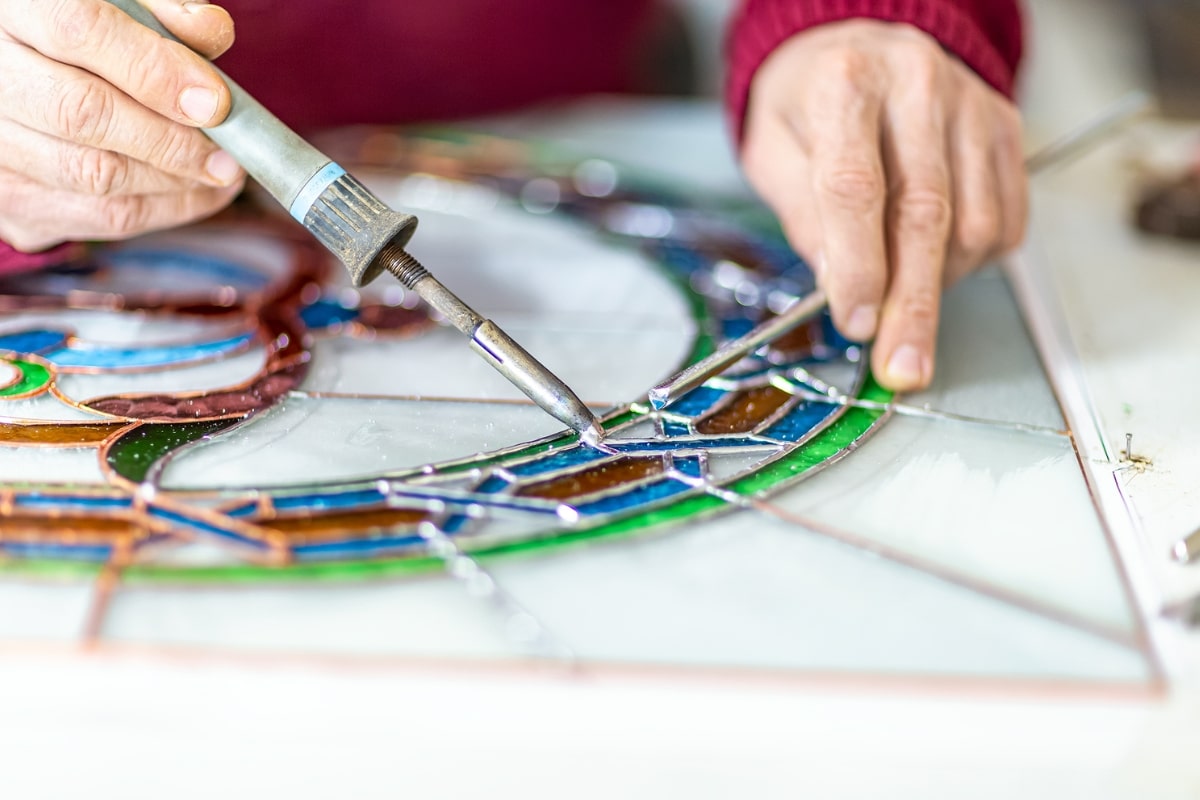
The process of creating stained glass requires concentration and precision; it demands absolute attention to detail—from cutting the glass to assembling the individual pieces. This focus on the work helps to “clear” the mind of everyday worries, as the hobby compels you to live in the moment, offering a form of meditation through art.
3. Why it’s easy and affordable to get started
Yes, it might seem complicated, but there are simple projects for beginners that you can try without needing expensive tools. A small stained-glass hanging or a window decoration is a perfect choice for a first project!
4. Why it’s an art form with endless possibilities
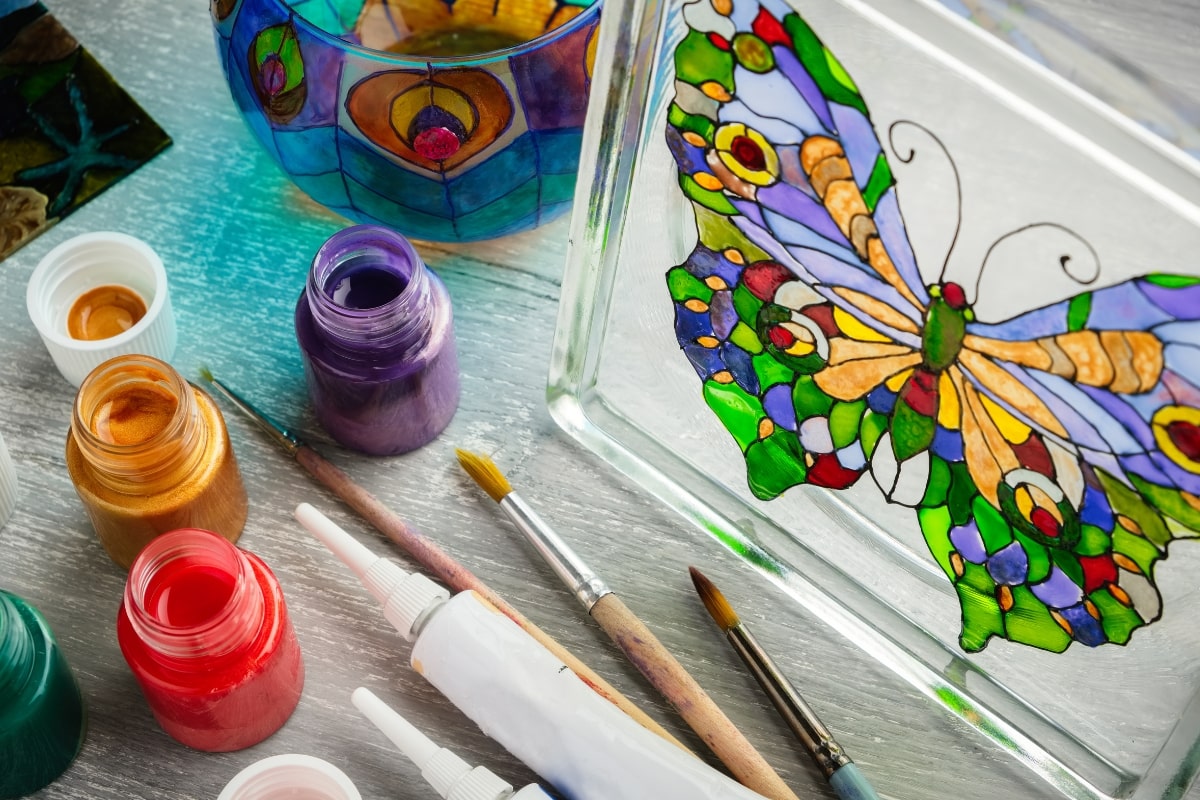
From windows and mirrors to lighting, decorations, and jewelry—stained glass knows no bounds! If you have an artistic streak, you can create masterpieces. If you’re just looking to have some fun, you can experiment with simple geometric patterns.
5. Why it could turn into a profession
More and more people appreciate handcrafted stained glass and are willing to pay for unique pieces. If you take it seriously, you can sell your creations online or at exhibitions.
How to get started
- Learn the basics: watch videos, follow online tutorials, or, better yet, look for a local workshop for beginners. Expert guidance will help you learn the correct steps and avoid common beginner mistakes. Plus, in a workshop, you’ll meet others interested in the art of stained glass—a great opportunity to network, share ideas, and learn from the experience of others.
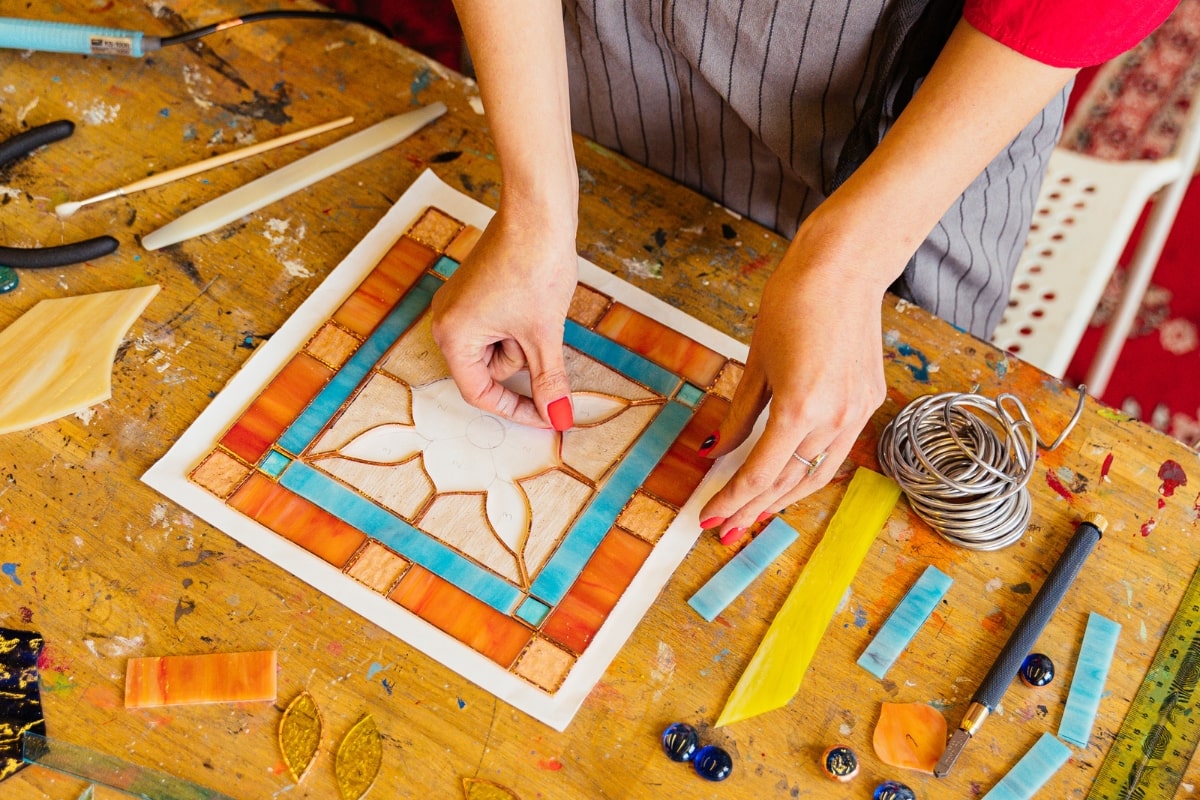
- Get the right tools: The basics include glass, a glass cutter, copper foil, a soldering iron, and solder.
- Start with simple designs: You don’t have to create a stained-glass masterpiece right away! Begin with designs that incorporate geometric shapes, such as squares, triangles, circles, or rectangles. These designs are easy to cut and assemble, and they offer a great opportunity to experiment with glass colors and the interplay of light. For instance, you could create a simple floral design, using colored glass for the petals and a dark green for the leaves. This design can be straightforward or include subtle variations, such as flowers of different sizes or shades.
- Don’t be afraid to make mistakes – As with any art form, practice makes perfect. And believe us, every mistake can become an opportunity to learn something new!
Ready to give it a try?
The art of stained glass remains a stunning form of expression, blending tradition with modern creativity. While techniques and materials have evolved, the core element—the interplay of light and color—remains unchanged. It doesn’t matter if you’ve never used a glass cutter before; the process is so enjoyable that you’ll be hooked in no time!
Your first step in Spain
Look for an introductory session at workshops or cultural centers in your municipality. Compare the technique being taught, the materials included, the group size, and whether you will be able to finish your piece during the class. To practice at home, start with a small project and buy only the materials you need; check the manufacturer’s instructions, as well as the proper ventilation and protective measures required for each product.
Original article: 2025-02-18. Edition adapted for Spain: 27 October 2026. Read the Greek original. Original author: Eleni Agiou.