Ceramics is one of the most creative hobbies anyone can take up. Working with clay—the process of shaping it and transforming a simple material into a useful or decorative object—offers relaxation, a means for creative expression, and a great sense of satisfaction.
If you are thinking about getting started with ceramics for beginners, this guide contains everything you need: materials, tools, basic techniques, equipment, and practical tips for your first steps!
What is ceramics?
The art of ceramics is the process of shaping clay to create objects, which are then fired at high temperatures to harden them. This can include:
- Functional objects (mugs, plates, bowls)
- Decorative objects (vases, sculptures)
- Artistic creations
Ceramics is primarily divided into:
- Hand-built ceramics (made by hand)
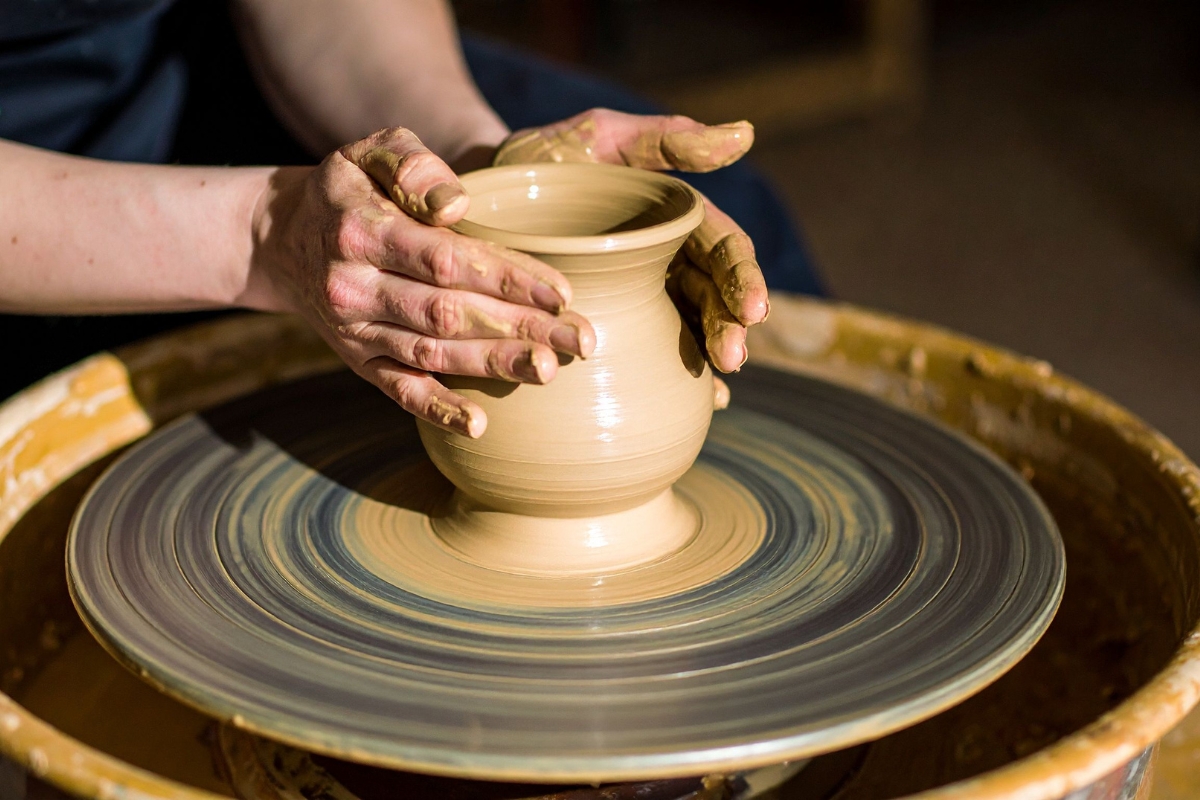
- Wheel-thrown ceramics
For beginners, hand-building is generally more accessible and affordable as a starting point.
What you need to start making ceramics
1. Ceramic clay
The fundamental material is, of course, ceramic clay. There are different types:
- Red clay (terracotta) – ideal for beginners
- White clay (earthenware or stoneware) – aesthetically more neutral
- Stoneware clay – durable and suitable for functional objects
- Air-dry clay – does not require a kiln (ideal for practice)
If you are just starting out, you can try air-dry clay for practice. However, if you want an authentic pottery experience, you will need clay that is fired in a kiln.
2. Basic pottery tools
You don’t need expensive equipment to get started. A simple set of pottery tools includes:
- Wire clay cutter
- Spatulas and shaping tools
- Pottery needles
- Sponge
- Rolling pin (for clay slabs)
- Wooden or metal carving tools
Many of these tools can be temporarily replaced with kitchen utensils!
3. Work surface
Pottery requires a clean, stable surface. Ideally:
- A wooden table
- Canvas or fabric to prevent the clay from sticking
- Good ventilation
Avoid surfaces that absorb moisture or are difficult to clean.
4. Potter’s wheel (optional)
A potter’s wheel is not necessary for beginners, but if you are looking for a real challenge, you will need one.
Options include:
- Electric wheels
- Manual (kick) wheels
- Small wheels for beginners
If you do not want to make an investment right away, you can take pottery classes at a studio.
5. Ceramic kiln
A kiln is essential if you are using clay that requires firing. The firing temperature can range from 900 °C to 1300 °C, depending on the type of clay.
For beginners:
- You can collaborate with a ceramics studio.
- Rent space in a studio to carry out the firing process.
- Sign up for ceramics classes, where you can learn everything from an experienced artisan.
6. Glazes
Ceramic glazes are special colors applied after the first firing; they provide:
- Color
- A smooth finish
- Waterproofing
Glazes can be transparent or colored, and either matte or glossy. For functional objects, it is essential to use safe, food-grade glazes.
Basic ceramic techniques for beginners
Coil technique
Clay is rolled into coils, which are then arranged in circles to form a vessel.
Slab technique
Clay is rolled out into flat sheets, which are then joined together.
Pinch technique
The clay is shaped using your fingers—ideal for small bowls.
These techniques are perfect for practicing before you start using a potter’s wheel!
When beginning your work with ceramics, remember that your initial results may not always be perfect—and that is completely normal. Progress comes through practice and experimentation, so don’t get discouraged. Always ensure the clay is kept well-covered when not in use so it doesn’t dry out and lose its elasticity. Also, work with clean tools for better control and a neater, more polished result.
Techniques for joining pieces and proper drying
It is essential to learn the correct technique for joining pieces—scoring the contact points and using water or clay slip to create a firm bond. Finally, allow the pieces to dry naturally before firing, as rushing the process can lead to cracks or breakage. Ceramics requires patience and perseverance, but the creative process itself is just as important and rewarding as the final result.
Getting started with ceramics doesn’t require a large investment or prior experience. With some basic clay, a few tools, and a desire to experiment, you can enter a world of creation that offers both relaxation and a meaningful form of expression.
At HobbyDetective, you can search for pottery workshops and classes, and connect with people who will guide you step-by-step into the world of clay.
HobbyDetective Spain is preparing its community and experiences. Explore what is coming next. HobbyDetective
Your first step in Spain
Look for an introductory session at workshops or cultural centers in your local area. Compare the techniques being taught, the materials included, the group size, and whether you will be able to complete your piece during the class. If you want to practice at home, start with a small project and purchase only the materials you need; always check the manufacturer’s instructions, and ensure you have proper ventilation and the necessary protective gear for each product.
Original article: 2026-02-11. Edition adapted for Spain: 27 October 2026. Read the Greek original. Original author: Eleni Agiou.