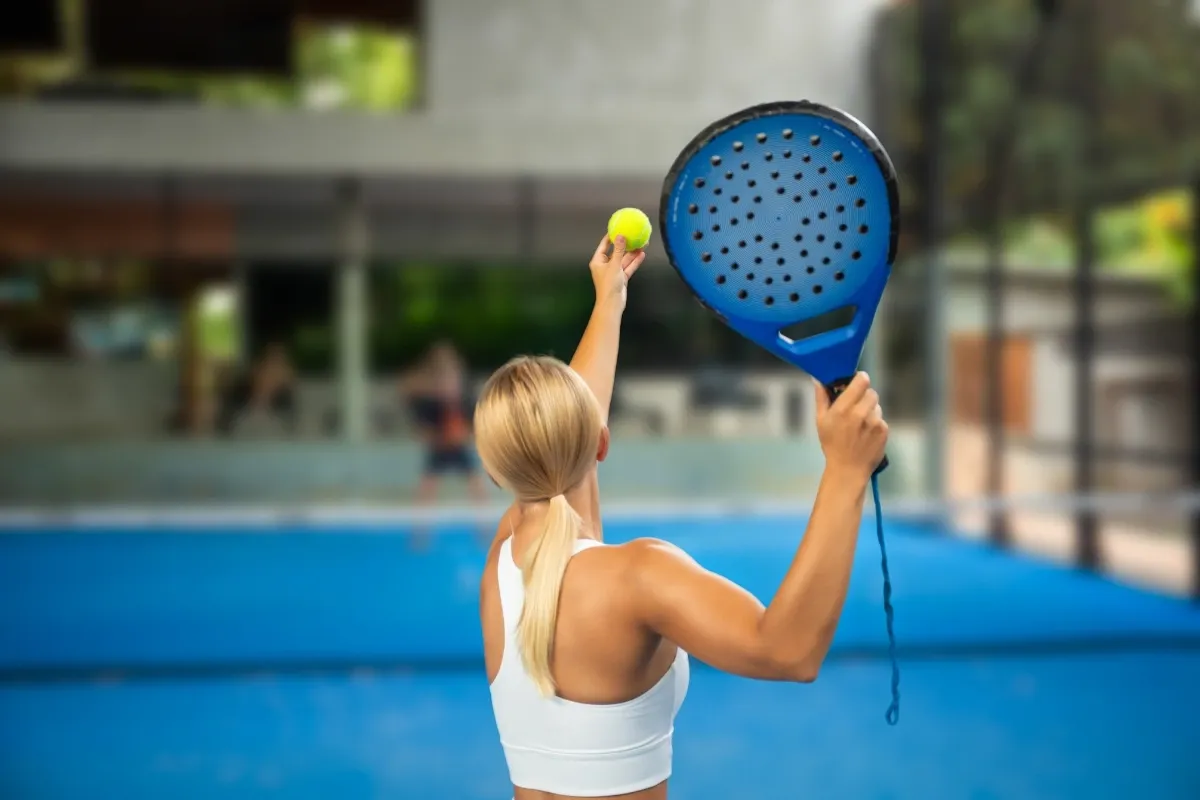
Padel is a racket sport that combines elements of tennis and squash. It is typically played in pairs and features a unique aspect: the walls are part of the game.
If you’ve never played before, you might initially struggle to figure out where to position yourself or when to hit the ball after it bounces off a wall. However, after a few matches, you’ll start to get the hang of it—and that’s when the fun begins!
What is padel?
Padel is a racket sport played on an enclosed court featuring glass and metal walls. The official international federation for this sport is the International Padel Federation (FIP), which establishes the official rules. The court is smaller than a tennis court, and the game is primarily played 2 against 2.
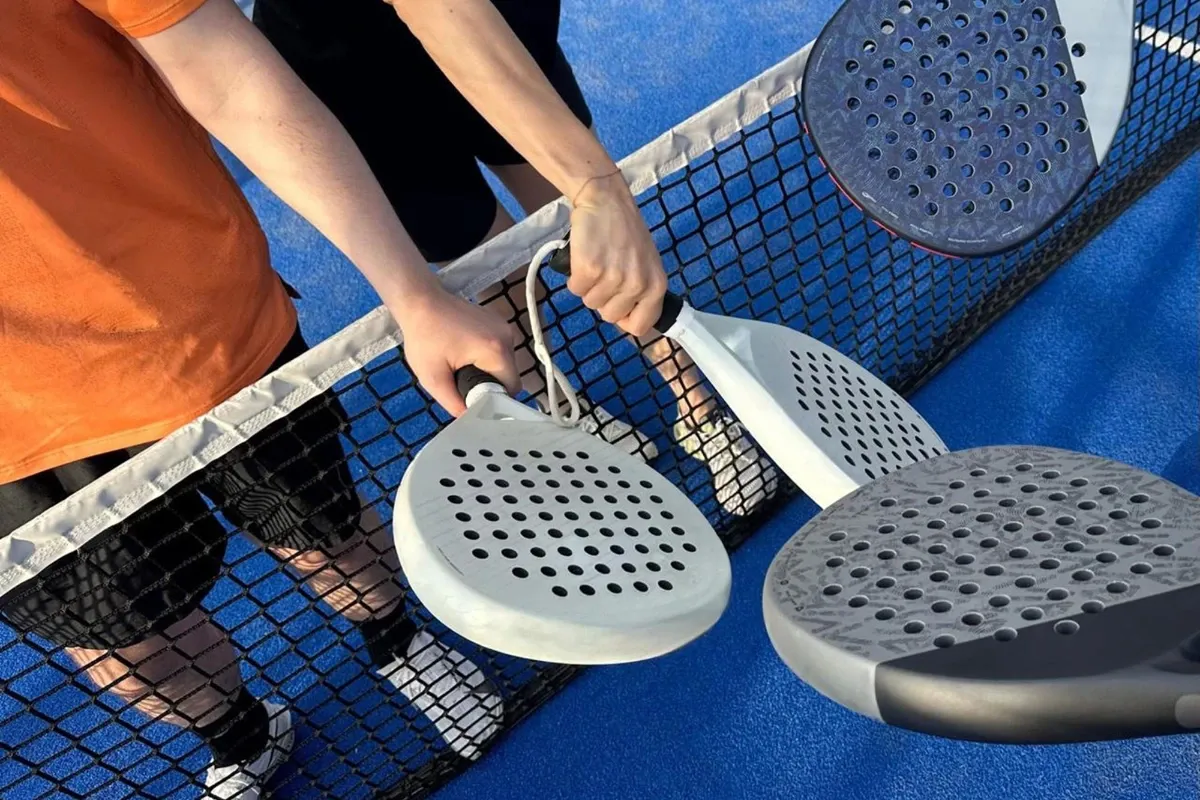
The ball resembles a tennis ball, while the racket is solid—lacking strings and featuring holes across its surface.
The unique aspect? The rally does not end when the ball hits the wall. If it bounces on your side of the court first and then strikes the wall, you can still play it and continue the rally.
How is padel played?
The objective is simple: send the ball to the opponent’s side and force them to make a mistake.
The ball must pass over the net and bounce within the opponent’s court. Players may also use the walls, provided they follow the rules regarding how and when the ball can be struck. Unlike in tennis, you don’t need to worry every time the ball heads toward the glass. In padel, the wall can actually become… your teammate.
Basic rules of padel
1. It is generally played 2 against 2
Standard padel is a team game involving four players—two on each side of the court. This means you aren’t just playing against two opponents; you must also learn to cooperate with your partner.
2. The serve is executed diagonally
The serve is performed below the waist, after the ball has bounced on the ground, and must be directed diagonally into the opponent’s service box. You have two attempts to serve.
3. The ball can hit the wall
This is one of the major differences compared to tennis. If the ball bounces first on the ground on your side of the court and then hits the wall, you can return it before it bounces a second time.
On the other hand, if the ball hits your wall directly without bouncing on the ground, the rule does not apply in the same way.
4. The ball can go out of bounds
On some courts, it is possible for a player to go outside the court boundaries to return a ball. However, this only applies to courts and conditions that meet the relevant safety standards.
Therefore, if you see someone jumping outside the court boundaries to chase a ball, do not try it during your first training session.
How is the score calculated in padel?
In the classic scoring system, the score follows the sequence: 15 → 30 → 40 → game. The official FIP regulations now include alternative scoring systems, such as the new “Golden Point” (Punto Estrella), which will be implemented in certain competitions starting in 2026.
A set is generally won when a team reaches 6 games with a lead of at least two games, while in certain cases, a tie-break is used. In competitions where the new “Star Point” (*Punto Estrella*) is used, when a game reaches deuce, there are additional advantage phases and, if necessary, a decisive point: the Star Point. This system has been implemented on certain international circuits since 2026, including Premier Padel and the CUPRA FIP Tour.
For your first match at an amateur level, you don’t need to memorize the entire rulebook. You will learn as you play.
What equipment do I need to play padel?
The good news is that you don’t have to show up to your first lesson with a bag full of gear.
You need:
- a padel racket
- padel balls
- sports shoes suitable for the court
- comfortable sportswear
- water
If you’re just starting out, you don’t need to buy an expensive racket. Many clubs rent out rackets or allow you to test them before making a purchase.
How do I get started with padel?
The first step is very simple: book a court and give it a try. If you don’t have a friend who already plays, look for a club that offers beginner classes or organizes matches based on skill level.
In your first few lessons, you will primarily learn:
- how to hold the racket
- basic forehand and backhand strokes
- how the serve works
- how to use the walls
- where to position yourself on the court
- how to cooperate with your teammate
And you will likely discover very quickly that knowing how to hit the ball is not the same as knowing where you should be positioned.
Is padel difficult for beginners?
No, but like any sport, it requires some practice. The fact that the court is smaller and that the walls can be used makes the game different from tennis. You don’t need any prior experience with racket sports to get started.
What you might find most challenging at first is getting used to the movement of the ball after it bounces off a wall. However, after a few practice sessions, you will begin to understand it almost automatically.
Padel or tennis?
If you have played tennis before, you will recognize several elements: the scoring system, the serve, forehands, backhands, and the net. However, padel features different court dimensions, a different type of racket, and—most importantly—the use of walls during play. If you haven’t played either sport, you don’t need to learn tennis first to start playing padel.
Frequently asked questions about padel
Can I play padel if I have never played tennis?
Yes. You do not need any prior experience in tennis or any other racket sport. The basic shots and rules are learned through practice.
How many people do I need to play padel?
Standard padel is played 2-on-2, so four players are required. However, many clubs organize matches based on skill level, so you can find teammates and opponents even if you don’t have a group of your own.
What kind of racket do I need to start playing padel?
To begin, choose a racket suitable for beginners that isn’t too heavy. There’s no need to buy an expensive model before you figure out what works best for you.
Can I use a tennis racket?
No. Padel uses a special, compact racket that differs in shape and construction from a tennis racket.
Do I need to know all the rules before playing?
No. It’s helpful to know the basic rules regarding the serve, the bounce, and the scoring, but most will be much easier to grasp once you’re actually on the court.
How difficult is it to learn padel?
The fundamentals can be picked up relatively quickly, but proper positioning, coordinating with a partner, and utilizing the walls require practice.
Where can I learn padel?
HobbyDetective Spain is currently building its community and catalog of experiences. In the meantime, use these ideas to explore local options, and be sure to verify the latest details directly with each organizer.
Your first step in Spain
Look for a beginner-level activity near you and mention your experience level before booking. Confirm details regarding equipment, requirements, insurance, and the policy for bad weather. For outdoor activities, check the specific advisories and restrictions for that location—conditions vary between coastal areas, the interior, and the islands. Choose an activity based on your own preparation and the guidance of professionals, rather than relying solely on a photograph or a difficulty label.
Original article: 2026-10-14. Edition adapted for Spain: 27 October 2026. Read the Greek original. Original author: Eleni Agiou.