Have you decided to conquer the snowy slopes, but can’t decide between skiing and snowboarding? Don’t worry—you’re not alone. Many winter sports enthusiasts find themselves in the exact same position.
Let’s take a look at both sports to help you decide which one is the best fit for you.
The history of these sports
Before we dive into the technical details, let’s take a look at the history of these two exciting sports.
Skiing has ancient roots. Archaeological findings in Russia suggest that some form of skiing was practiced as far back as 8,000 years ago. Of course, back then, it served more as a means of transportation than as a sport. Modern alpine skiing began to develop in Norway during the mid-19th century.
Snowboarding, on the other hand, is a relatively new sport. It originated in the United States in the 1960s, when Sherman Poppen fastened two skis together to create a toy for his daughter. He called it a “snurfer” (a combination of “snow” and “surfer”). From that point on, the sport evolved rapidly, with Jake Burton Carpenter and Tom Sims playing a key role in its development during the 1970s and 1980s.
Body Stance: Two Different Worlds
Skiing: The Art of Dual Balance
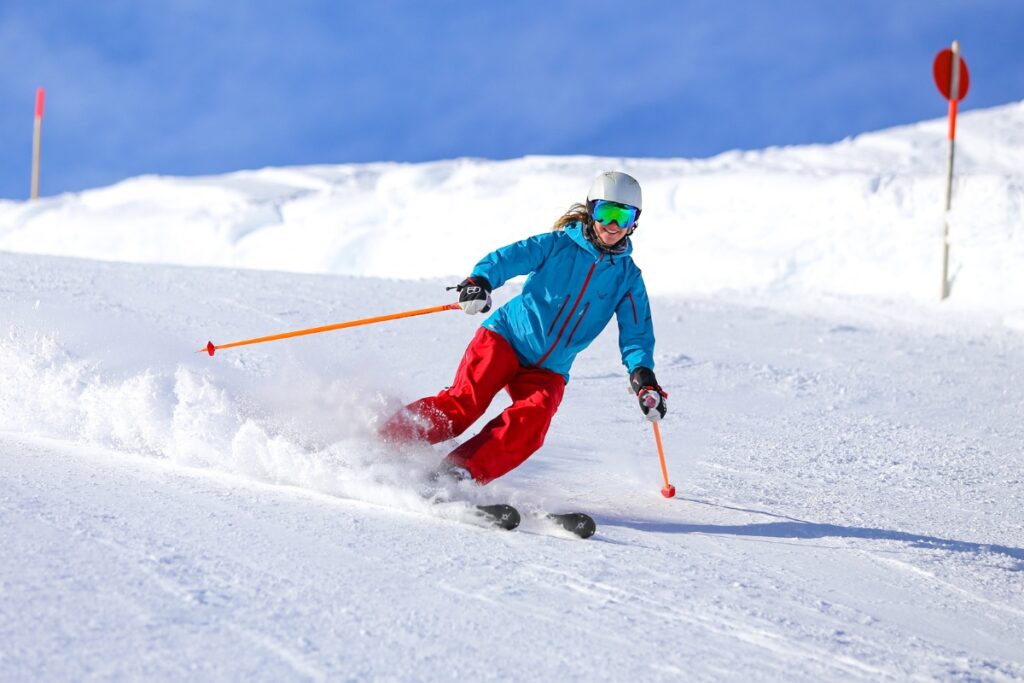
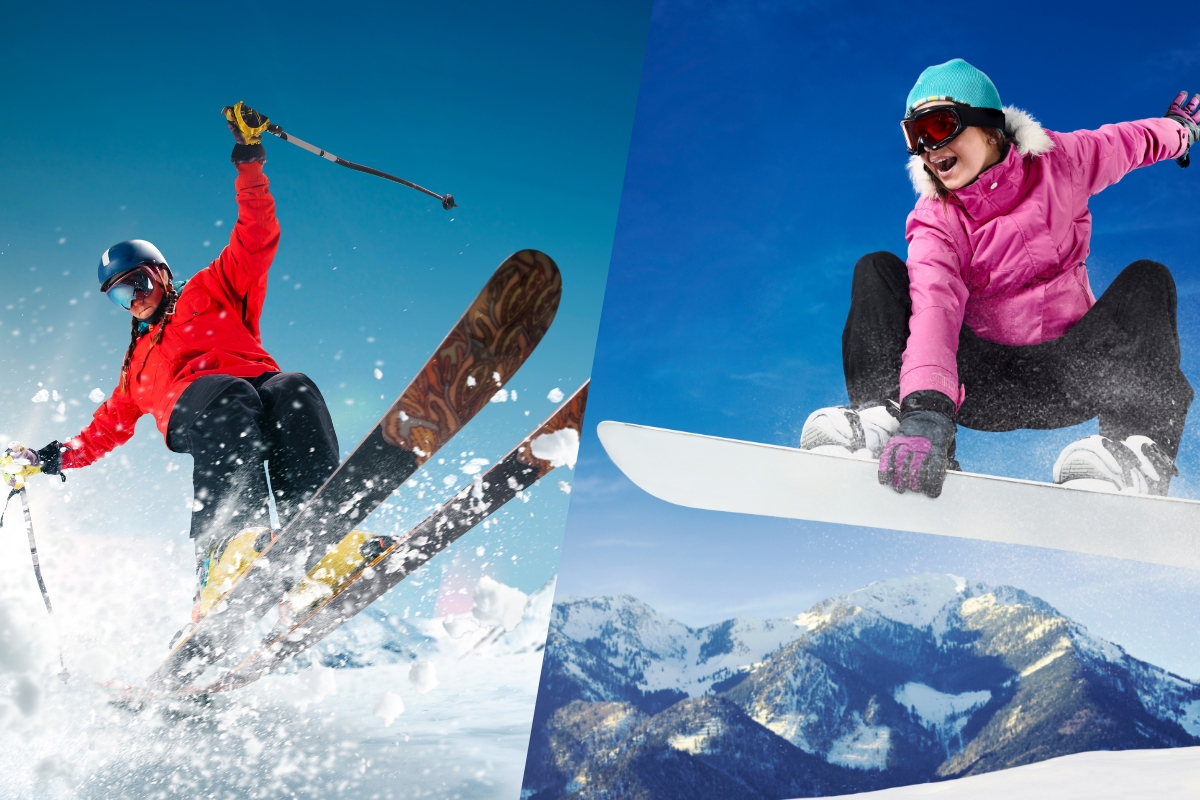
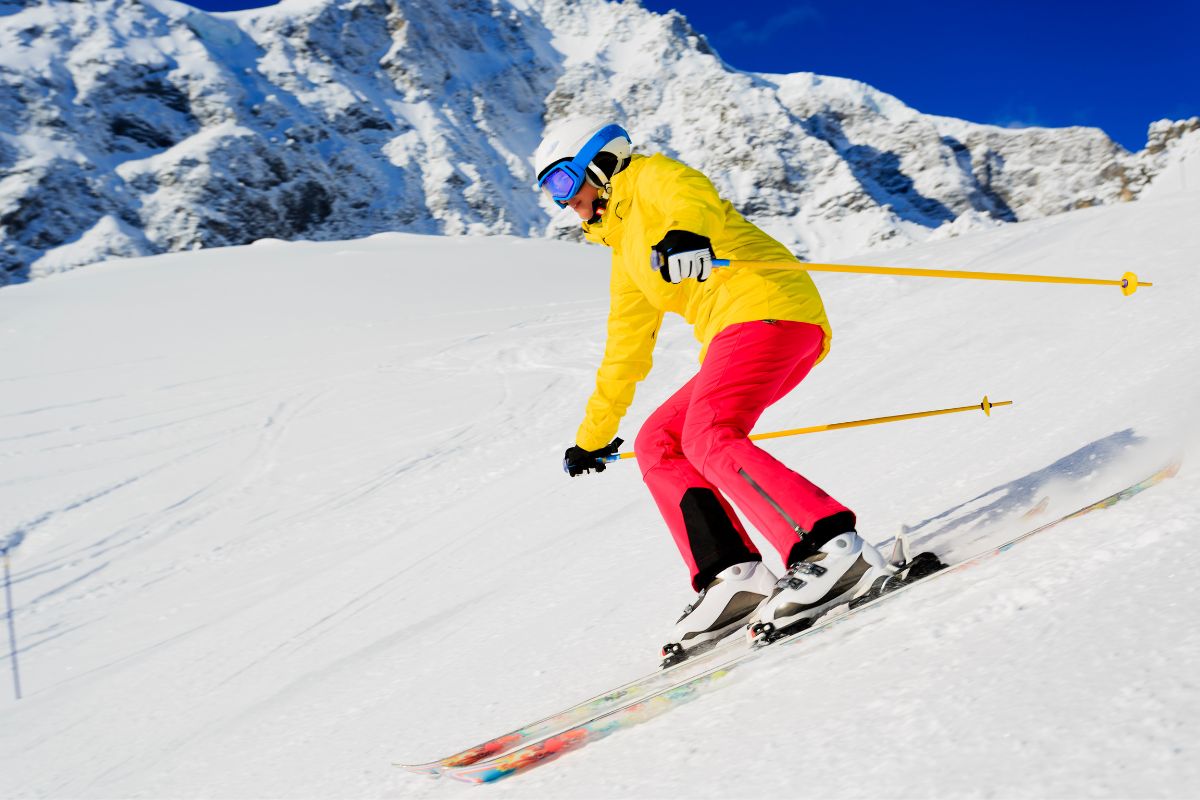
In skiing, your feet are separated onto two distinct boards (skis). Imagine gliding across the snow as if you were walking in very long boots. The stance is frontal—meaning your body faces the direction of movement.
This setup offers great flexibility in your movements. You can turn, brake, and maneuver with high precision, employing different techniques for each foot. You need good balance and coordination to control both skis simultaneously, especially at high speeds or on challenging terrain.
Using poles adds an extra dimension to your control and balance. They allow you to feel the ground, support your weight during turns, and maintain momentum on flat terrain.
Snowboarding
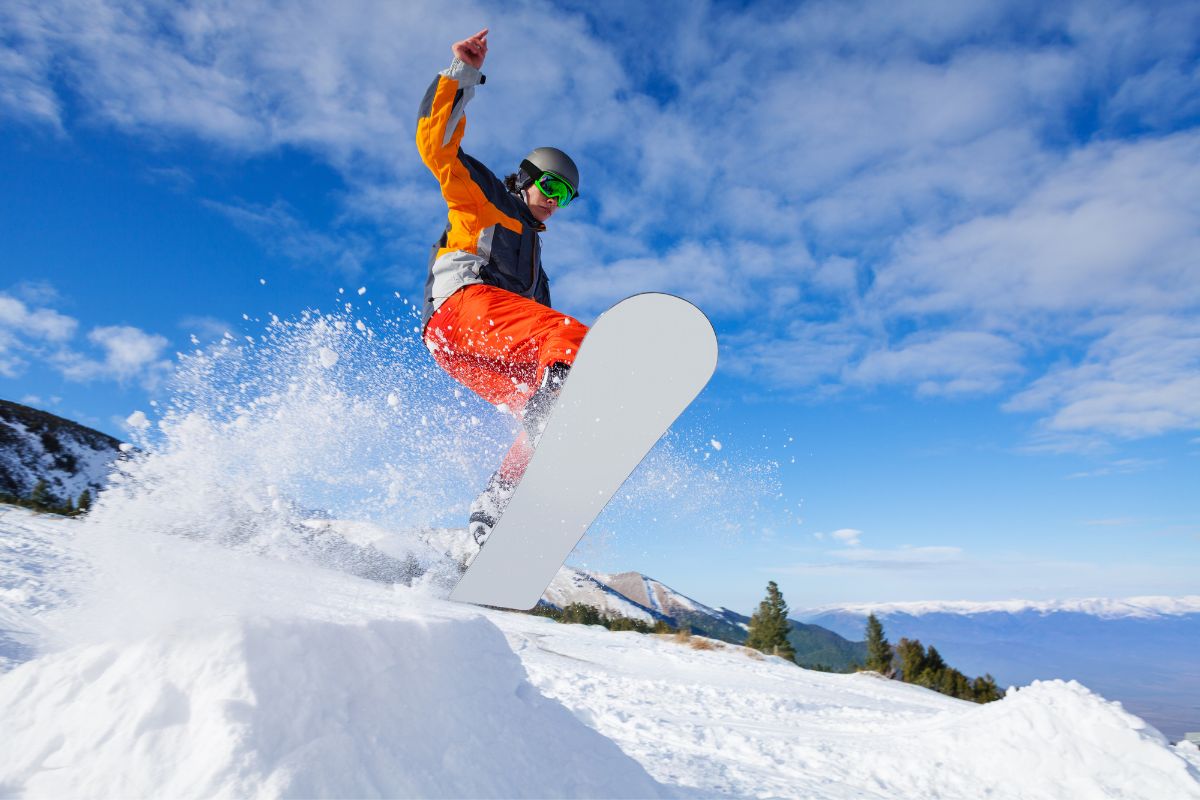
Snowboarding, by contrast, places you sideways on a single board. It is much like surfing on snow. Your feet are firmly secured to the board, one in front of the other, and your body is oriented sideways relative to the direction of movement.
This position might feel a bit unusual at first, especially if you are new to similar board sports like surfing or skateboarding. However, many people find it more relaxed and natural once they get used to it.
In snowboarding, turns and speed control are achieved by leaning your body and shifting your weight from your toes to your heels (and vice versa). This requires a different sense of balance and body control compared to skiing.
The learning curve: which is easier?
Skiing: a quick start, a long road to perfection
Skiing has a slight advantage in the early stages. Since the stance is more similar to walking, many beginners feel more comfortable from the very start. After a day or two of intensive practice, it is possible to complete full runs on easy slopes.
However, the path to perfecting one’s technique is a long one. As you move toward more advanced techniques and challenging terrain, you will find that skiing requires constant practice and improvement. Mastering complex skills—such as carving, jumping, or off-piste skiing—can take years.
Snowboarding: a difficult start, a smoother progression
Snowboarding requires a bit more patience at the beginning. It takes time to get used to the sideways stance, and the first few days may involve a fair number of falls. Many beginners spend most of their first day simply learning how to maintain their balance and slide in a straight line.
But don’t get discouraged! Once you get the hang of it, your progress can be rapid. Many snowboarders find that, once they have mastered the basics, advancing to more difficult levels feels more natural—and happens more quickly—than it does in skiing.
It is worth noting that, while skiing is easier to start with, progressing to more advanced levels requires more effort. In snowboarding, once the initial hurdles are overcome, learning more complex techniques feels more natural.
Equipment and cost: Small differences, significant impact
In terms of cost, you won’t notice much of a difference between skiing and snowboarding. However, there are a few details worth knowing:
Skiing equipment
- Skis (two boards)
- Ski boots
- Bindings
- Poles
- Helmet
- Ski goggles
- Specialized clothing (waterproof pants and jacket)
Snowboarding equipment
- Snowboard (one board)
- Snowboard boots
- Bindings
- Helmet
- Ski goggles
- Specialized clothing (waterproof pants and jacket)
- Wrist guards (optional, but recommended for beginners)
As you can see, the main difference is that skiing requires two boards (skis) and poles, whereas snowboarding requires only one board. The boots and bindings also differ between the two sports.
Don’t worry about the cost of purchasing equipment upfront. Most ski resorts offer affordable rental options. This way, you can try out both sports before deciding which one you want to invest in.
Safety: Different risks, same level of care
Each sport carries its own specific risks, and it is important to be aware of them in order to avoid them:
Risks in skiing
- Knee injuries: Because the legs move independently, the knee joints are particularly vulnerable.
- Ankle injuries: Rigid ski boots can lead to sprains or fractures in the event of a fall.
- Collisions: Due to the high speeds that skiers can reach, collisions with other athletes or obstacles are more likely.
Risks in snowboarding
- Wrist injuries: Beginners in snowboarding tend to fall forward, often bracing themselves with their hands.
- Shoulder injuries: Backward falls can result in shoulder dislocations or fractures.
- Spinal injuries: Poor body positioning during a fall can lead to spinal strains or injuries.
Regardless of the discipline you choose, proper training and protective gear are essential for enjoying your sport safely. Always wear a helmet and follow the safety rules on the slopes.
Adapting to conditions
Weather conditions and snow quality significantly influence your experience on the mountain, whether you are skiing or snowboarding.
Skiing in different conditions
- Hard-packed snow: Skiing has an advantage here; the sharp edges of the skis and a larger surface area in contact with the snow allow for better control.
- Fresh powder: Wide skis provide good flotation, though specific technique is required to maintain speed.
- Slushy snow: Skiing can be challenging, as your weight is distributed between two separate boards (skis).
Snowboarding in different conditions
- Hard-packed snow: This can be difficult for beginners, but experienced riders can take advantage of sharp edges to execute quick turns.
- Fresh snow (powder): Snowboarding truly shines in these conditions. The large surface area of the board allows for easy gliding over the snow.
- Slushy snow: Snowboards generally perform better in these conditions due to their larger surface area.
Techniques and styles
Both sports offer a variety of techniques and styles that you can explore as you improve.
Skiing techniques
- Carving: Clean, precise turns made using the edges of the skis.
- Parallel turns: A fundamental technique for intermediate-level skiers.
- Mogul skiing: Navigating slopes covered in large mounds of snow.
- Freeskiing: Off-piste skiing in untouched, virgin snow.
- Park skiing: Performing jumps and tricks in specially designed areas.
Snowboarding techniques
- Carving: Clean turns made using the edges of the board.
- Side-slipping: A basic technique for controlling speed.
- Buttering: Rotating the board while one end is lifted off the snow.
- Jibbing: Sliding across rails and other obstacles.
- Freeride: Off-piste snowboarding in deep snow.
Culture and Community
The choice between skiing and snowboarding can also be influenced by the culture surrounding each sport.
Skiing has a more traditional and classic image. It is often associated with family vacations and has a more formal atmosphere. There are many skiers of all ages, and the community tends to be more diverse in terms of age.
Snowboarding, on the other hand, has a more youthful and alternative image. It is often associated with skateboarding culture and has a more relaxed vibe. The snowboarding community tends to be younger and possesses a stronger sense of camaraderie.
Of course, these are generalizations; you will find people of all ages and backgrounds in both sports. The important thing is to choose the sport that best suits you, regardless of any stereotypes.
Skiing or snowboarding?
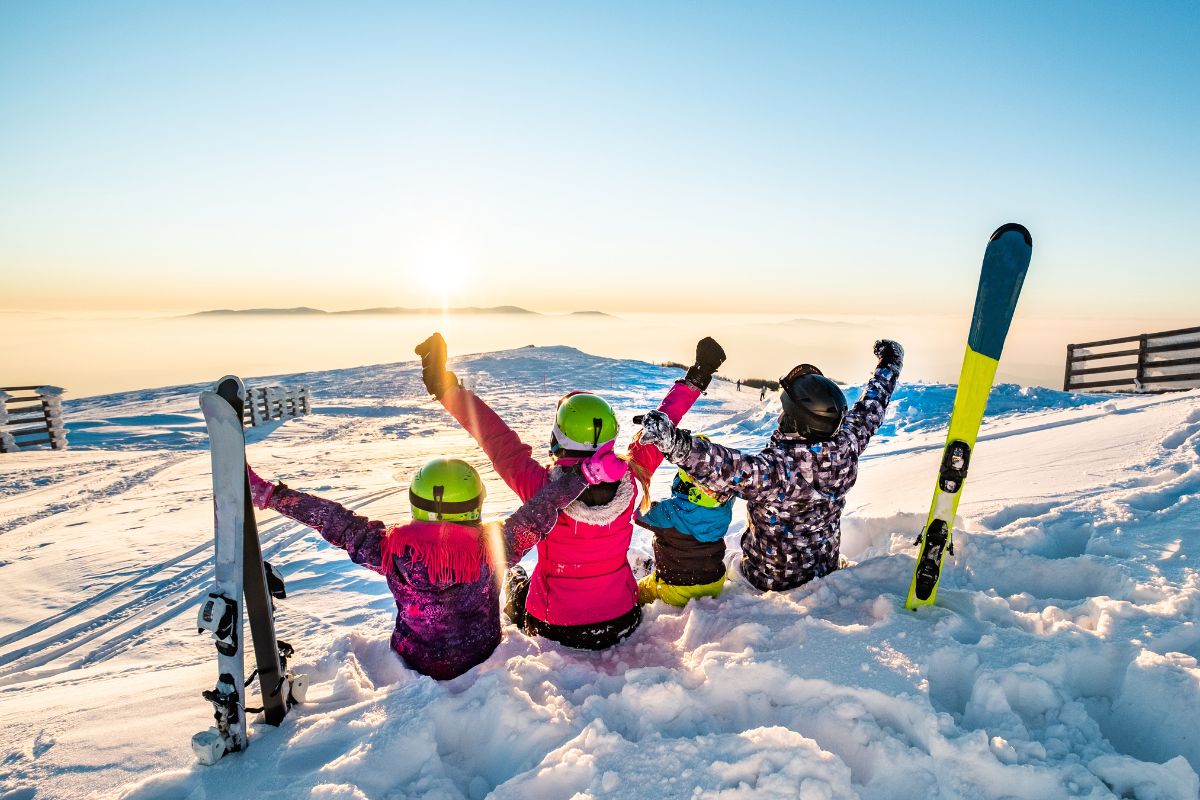
Choosing between skiing and snowboarding is a purely personal decision. There is no single “right” answer that applies to everyone. It is best to consider what aligns with your physical abilities and personal preferences. Without a doubt, both skiing and snowboarding offer incredible fun and a unique experience on the snow, as well as a sense of freedom as you descend snowy slopes.
Now that you know the basic differences, all that remains is to see which one appeals to you more. And the best way to find out is to give it a try.
At HobbyDetective, you can discover winter activities, lessons, and snow-based experiences—an opportunity to explore a world quite different from your everyday life.
HobbyDetective Spain is preparing its community and experiences. Explore what is coming next. HobbyDetective
Your first step in Spain
Look for a beginner-level activity near your home and discuss your experience level before booking. Confirm details regarding equipment, requirements, insurance, and the policy for bad weather. For outdoor activities, check the specific advisories and restrictions for that location—conditions vary significantly between the coast, the interior, and the islands. Choose an activity based on your own preparation and the guidance of professionals, rather than relying solely on a photograph or a difficulty label.
Original article: 2024-08-09. Edition adapted for Spain: 27 October 2026. Read the Greek original. Original author: Eleni Agiou.