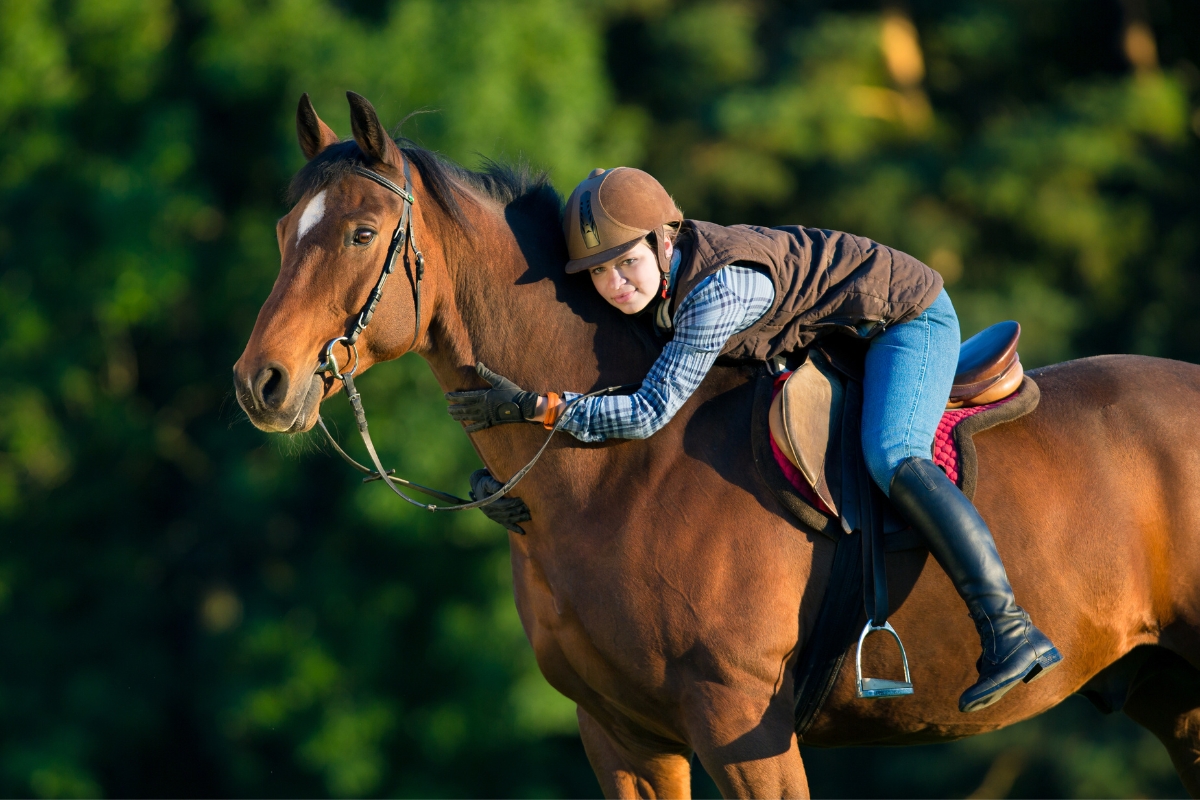
Horseback riding is a multidimensional sport that offers a unique experience, combining physical exercise with the development of a special bond with one of nature’s most impressive and historically significant animals: the horse. With deep roots in human history, this activity has evolved from a basic means of transportation and a tool of war into a popular sport and recreational pastime.
Horseback riding offers numerous benefits. Physically, it improves posture, balance, coordination, and muscular strength. Psychologically, it boosts self-confidence , reduces stress, and fosters patience and self-control. Furthermore, interacting with horses and spending regular time in a natural environment contributes to emotional well-being.
As a beginner rider, you will discover an exciting world that will challenge you, yet also reward you. You will learn to communicate with an animal weighing over 450 kilograms, interpret its body language, and move in harmony with it. This process requires patience, dedication, and consistent practice—but the satisfaction of achieving a state where you and your horse function as a single, unified entity is truly priceless.
In this guide, you will find the essential information you need to begin your journey into the world of horseback riding. We will cover topics such as a basic understanding of the nature and behavior of horses, the equipment required for both you and your horse, the fundamental principles of riding, and the safety rules you must always follow. We will also provide an overview of various equestrian disciplines, allowing you to explore your options as you develop as a rider.
Whether your goal is to enjoy peaceful rides in nature, compete at a high level, or simply relish the company of these magnificent animals, this guide will provide you with a solid foundation to get started. Get ready to discover a world that blends art, science, and sport into a unique experience!
1. Understanding Horses
Before you begin riding, it is important to understand some basic facts about horses:
- Physiology: Horses are large, strong animals with very keen senses.
- Behavior: They are herd and prey animals with a strong flight instinct.
- Communication: They communicate primarily through body language.
- Diet: They are herbivores and need to eat frequently.
2. Basic Equestrian Equipment
To start riding, you will need:
- Riding Helmet: Essential for your safety.
- Riding boots: Featuring a small heel for safe use of the stirrups.
- Riding breeches: Specially designed to provide comfort and protection.
- Gloves: For better control of the reins.
3. Horse equipment
The basic elements of horse equipment are:
- Saddle: The rider’s seat.
- Reins: Used to control the horse’s head.
- Bridle: Connected to the bit/reins to guide the horse.
- Saddle pad: Protects the horse’s back.
4. Basic horse care
Horse care is an integral part of horseback riding:
- Grooming/Brushing: Cleans the coat and strengthens the bond with the horse.
- Hoof cleaning: Essential for the health of the horse’s feet.
- Feeding: Regular meals with appropriate feed.
- Exercise: Daily movement is essential for the horse’s health.
5. Basic Principles of Horsemanship
The fundamental principles you must learn are:
- Correct posture: Straight back, relaxed shoulders, heels down.
- Balance: Move with the horse, not against it.
- Light contact: Maintain a gentle connection with the horse’s mouth through the reins.
- Use of the legs: Your legs provide direction and momentum to the horse.
6. Basic horse gaits
There are three basic gaits you will learn:
- Walk: The slowest gait, a four-beat rhythm.
- Trot: A faster gait, a two-beat rhythm.
- Canter/Gallop: The fastest gait, a three-beat rhythm.
7. Horseback riding safety
Safety is paramount:
- Always wear a helmet.
- Learn to interpret the horse’s behavior.
- Follow your instructor’s directions.
- Do not overestimate your abilities.
8. Communicating with the horse
Effective communication is key:
- Use firm, calm movements.
- Speak in a calm voice.
- Be consistent with your commands.
- Observe and respond to the horse’s reactions.
9. Basic training
Initial lessons typically include:
- Familiarization with the horse and equipment.
- Mounting and dismounting safely.
- Maintaining correct body posture.
- Learn the basic commands (start, stop, turn).
10. Different equestrian disciplines
As you progress, you can explore different disciplines:
- Equestrian skill (dressage/precision riding): Performing precise movements within a specific space.
- Show jumping: Clearing obstacles in a specific order.
- Equestrian triathlon (eventing): Combines equestrian skill, show jumping, and endurance.
- Recreational riding: Leisurely rides in nature.
Horse riding requires dedication, patience, and continuous learning. With the right training and practice, you can develop a unique bond with horses and enjoy the many benefits of this sport. Every rider started from scratch, so don’t hesitate to take the first step into the exciting world of horse riding!
Your first step in Spain
Look for an introductory activity near your home and explain your experience level before booking. Confirm what equipment is needed, any requirements, insurance coverage, and the policy for bad weather. For outdoor activities, check the specific advisories and restrictions for that location—conditions vary between the coast, the interior, and the islands. Choose an activity based on your preparation level and the guidance of professionals, rather than just a photograph or a difficulty label.
Original article: 2024-08-20. Edition adapted for Spain: 27 October 2026. Read the Greek original. Original author: Eleni Agiou.