Over 1,500 years of history: Kung Fu has evolved from a combat system into a comprehensive philosophy of life. Its principles influence not only how you move, but also how you think, how you face challenges, and how you interact with others.
The true nature of Kung Fu
Kung Fu (or Gong Fu) literally means “achievement through effort.” Contrary to popular belief, it does not refer exclusively to martial arts. In Chinese culture, the term can be used for any skill acquired through practice and dedication.
Its history begins thousands of years ago in China, with roots tracing back to the Han Dynasty (206 BC – 220 AD), and it flourished during the Ming and Qing dynasties. It has evolved into numerous distinct styles, each with its own focus and techniques.
Some of the best-known styles include:
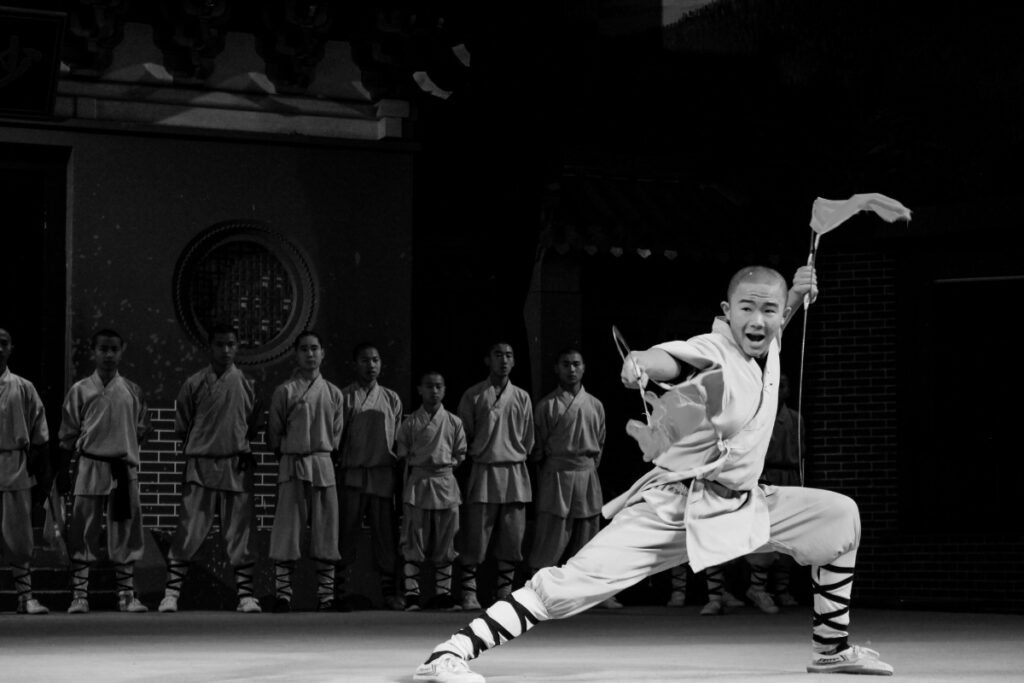
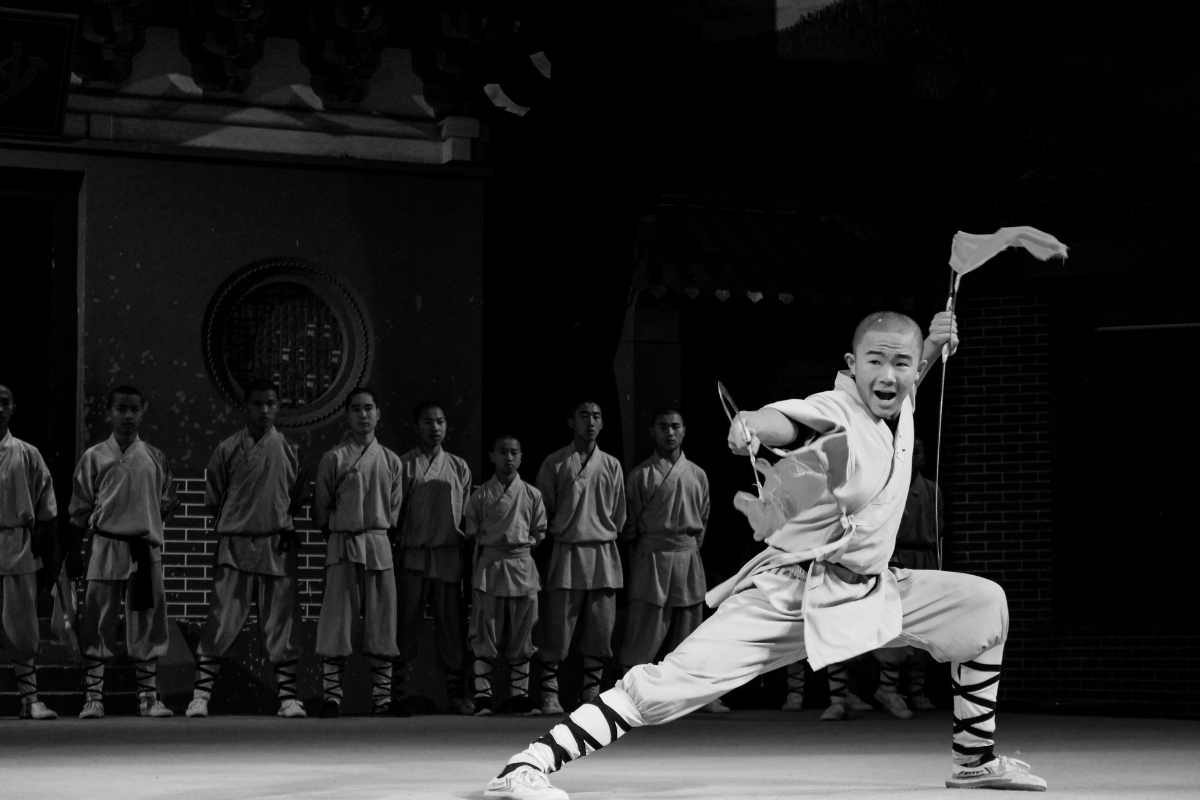
- Shaolin Kung Fu: Developed at the famous Shaolin Monastery, it is characterized by dynamic, explosive movements, with an emphasis on speed and precision. It includes numerous sub-styles that imitate the movements of animals such as the tiger, crane, snake, leopard, and dragon.
- Wing Chun: Created by the nun Ng Mui and perfected by her disciple, Yim Wing Chun. It focuses on economy of motion, close-quarters combat, and the “centerline” principle, making it ideal for smaller fighters facing larger opponents.
- Tai Chi (Taijiquan): Combines profound philosophy with slow, fluid movements that promote internal energy (*qi*). Although often practiced for its health benefits, it contains effective self-defense techniques based on the principle that softness overcomes hardness.
- Hung Gar: Developed by Hung Hei-Gun, it combines techniques from the tiger and the crane. It is recognized for its powerful stances, stability, and hand techniques that require tremendous strength. It favors a solid defense followed by devastating counterattacks.
- Praying Mantis: Characterized by precise, rapid movements that mimic the forelegs of a praying mantis, it features techniques for capturing opponents, as well as continuous, successive attacks.
Deep Philosophy
Behind the impressive movements of Kung Fu lies a rich philosophy rooted in Taoism, Buddhism, and Confucianism. It teaches:
- Discipline and patience: Perfecting a single movement can take years. Traditional masters would often have their students repeat the same stance for months before moving on to more advanced techniques.
- Respect: Toward masters (*sifu*), fellow students, and opponents. The Kung Fu tradition places great emphasis on hierarchy and respect for those who came before in the art.
- Self-control: Knowing how to fight carries the responsibility of avoiding violence. Most masters teach that the best fight is the one that is avoided.
- Balance: Between opposing forces—hard and soft, fast and slow, *yin* and *yang*. This principle is reflected in the movements, where strength alternates with flexibility.
What does this mean for you? Practicing Kung Fu can help you develop physical strength, mental fortitude, patience, and an inner peace that extends to every aspect of your life.
International Influence and Spread
From the mountains of China to the Hollywood screen, how did Kung Fu become a global phenomenon? The answer lies largely in cinema and popular culture. Legends like Bruce Lee introduced Kung Fu to the entire world.
- Bruce Lee: He introduced the philosophy of Jeet Kune Do—an approach that rejects rigid styles and adapts to the circumstances at hand. His famous line, “Be like water, my friend,” encapsulates his adaptive philosophy and transformed martial arts forever.
- Jackie Chan: He combined martial arts with comedy and acrobatics, creating a unique style that made Kung Fu accessible to a broader audience. He trained in the Peking Opera, which blends martial arts with theatrical elements.
- Jet Li: He became a Wushu champion before achieving fame as an actor, winning his first national championship at just 11 years old. His films, such as “Hero” and “Fearless,” showcase the artistic side of Kung Fu.
- Donnie Yen: He brought Wing Chun to the forefront with the film “Ip Man,” which tells the story of Bruce Lee’s master. He combines traditional Chinese martial arts with modern disciplines like MMA and boxing.
Despite their artistic embellishments, these films succeeded in conveying the core values of Kung Fu: self-improvement, overcoming obstacles, and the pursuit of perfection.
Holistic Benefits for Body and Mind
Regular Kung Fu practice offers numerous benefits. Why start today?
- Physical fitness:
- It increases muscular strength without excessive bulk, resulting in strong, defined muscles.
- It improves cardiovascular health through high-intensity aerobic exercise.
- It enhances flexibility and balance, reducing the risk of injury.
- It develops hand-eye coordination and spatial awareness.
- Mental well-being:
- It reduces stress through controlled breathing techniques and meditation.
- It boosts self-confidence as you master new skills.
- It fosters concentration and focus—skills useful in all areas of life.
- It teaches how to manage emotions such as fear and anger.
- Useful skills:
- It provides techniques that can be applied immediately in real-life dangerous situations.
- It develops environmental awareness and the ability to perceive risk.
- It improves reflexes and reaction time in unpredictable situations.
- It cultivates strategic thinking and problem-solving skills.
Have you ever wondered what your daily life might be like with greater self-discipline, better stress management, and improved physical well-being?
How to Begin Your Kung Fu Journey
If you are interested in exploring the world of Kung Fu, follow these steps:
- Self-awareness: Consider your personal goals. Are you looking for self-defense, physical fitness, spiritual development, or a combination of these? Each style is suited to different objectives and personalities.
- Research: Studying different styles:
- For strength and explosiveness: Shaolin Kung Fu, with its rich history and variety of techniques.
- For effective self-defense: Wing Chun, ideal for immediate application in real-life situations.
- For health and longevity: Tai Chi, with its emphasis on internal energy and harmony.
- For traditional techniques: Hung Gar, which preserves authentic Chinese tradition.
- Finding a school: Looking for schools with:
- Certified instructors with authentic training and lineage links to traditional masters.
- Positive feedback from students at various skill levels.
- A welcoming environment for beginners, free from toxic competition.
- Option to take a trial class before making a financial commitment.
- The Beginner’s Mindset: Begin with patience and humility. Early lessons may seem monotonous, as they focus on basic stances and movements; however, these form the foundation for advanced techniques. As the Chinese saying goes: “To build a tall tower, one needs a solid foundation.”
The Eternal Journey of Self-Improvement
Kung Fu is a way of life. Even great masters, after decades of practice, still consider themselves students. Chinese tradition holds that it takes at least 10 years to master the fundamentals, and a lifetime to achieve true understanding.
Ancient Chinese sages used to say: “Even the longest journey begins with a single step.” In the world of Kung Fu, this first step might be a simple stance with one’s feet firmly planted on the ground, an initial hand movement, or even a deep, conscious breath that connects the body with the spirit.
Your first step in Spain
Look for an introductory session at workshops or cultural centers in your municipality. Compare the technique being taught, the materials included, the group size, and whether you will be able to finish your piece during the class. To practice at home, start with a small project and buy only the materials you need; check the manufacturer’s instructions, as well as the proper ventilation and protective measures required for each product.
Original article: 2025-05-13. Edition adapted for Spain: 27 October 2026. Read the Greek original. Original author: Eleni Agiou.