What are miniatures?
A bookstore that fits in the palm of your hand. A tiny café with tables, shelves, and sweets the size of a fingernail. A room with wallpaper, lighting, and furniture so small that you have to be careful even when picking them up. Welcome to the world of miniatures! It is a creative hobby that involves building, decorating, or collecting small-scale objects.
This can include entire dollhouses, tiny rooms, scale models of buildings, miniature food, or small scenes that tell a story. And you don’t need to be a collector or a professional model-maker to get involved. You can start with cardboard, clay, sticks, craft supplies, and plenty of patience.
Why do we love creating miniature worlds so much?
It’s not just about small objects being adorable. There are several reasons why this hobby can be so enjoyable.
1. You can create a world exactly as you like.
Would you like a small bookstore with wooden shelves, old books, and a kitten sleeping next to the cash register? A dark shop filled with potions and mysterious jars? Or perhaps a vintage bedroom with floral wallpaper? In the world of miniatures, you decide almost everything: the colors, the objects, the decor, and the story behind the space.
In the world of miniatures, you can create your own miniature version of your dream space—right on a desk or workbench.
2. It is a hobby that requires focus.
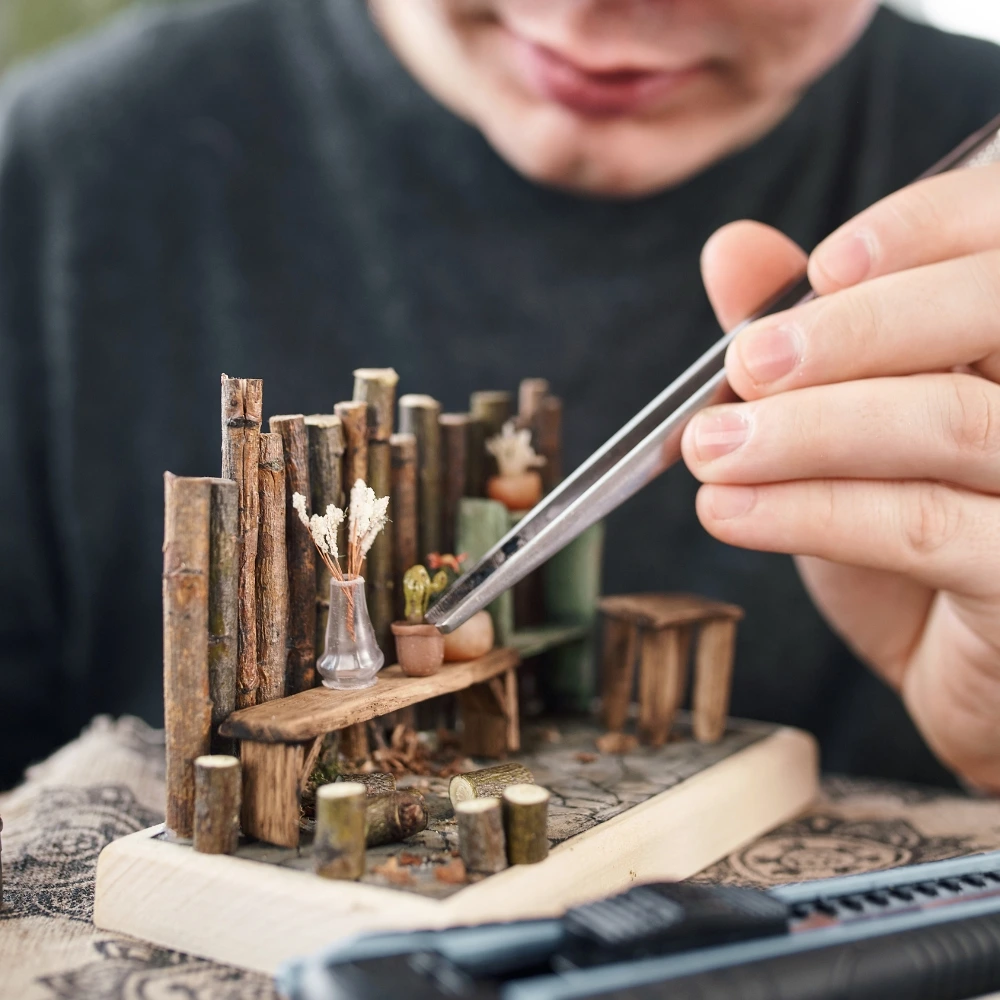
Creating miniatures demands observation, patience, and attention to detail. You need to cut, measure, glue, and adjust tiny objects and pieces until you achieve the desired result.
This process can be a pleasant way to take a break from your daily routine and work with something tangible.
This doesn’t mean that working with miniatures acts as therapy or that it will always be relaxing. However, if you enjoy projects that require concentration, it’s a hobby worth trying.
3. The limitations of a small scale make the creative process more interesting.
In a regular kitchen, a table is just a table. In a miniature setting, you have to adjust its dimensions, find the right material, and figure out how to craft the legs so they don’t break. There are many details to calculate before arriving at your final build.
Even something seemingly insignificant—like a book on a nightstand—might require several steps to create.
That’s the challenge: transforming something familiar into a small-scale creation that looks real.
4. You don’t have to buy everything ready-made.
One of the best things about miniatures is that you can use materials you already have on hand.
A piece of cardboard can become a bookshelf, a small stick can serve as a table leg, and scraps of fabric can be turned into curtains or cushions. Creating miniatures from recycled or repurposed materials is also a key part of DIY miniature projects.
Don’t forget that, in doing so, you’re also recycling materials you already have at home!
What kind of miniatures can you make?
In the world of miniatures, there are many options, depending on what you enjoy creating:
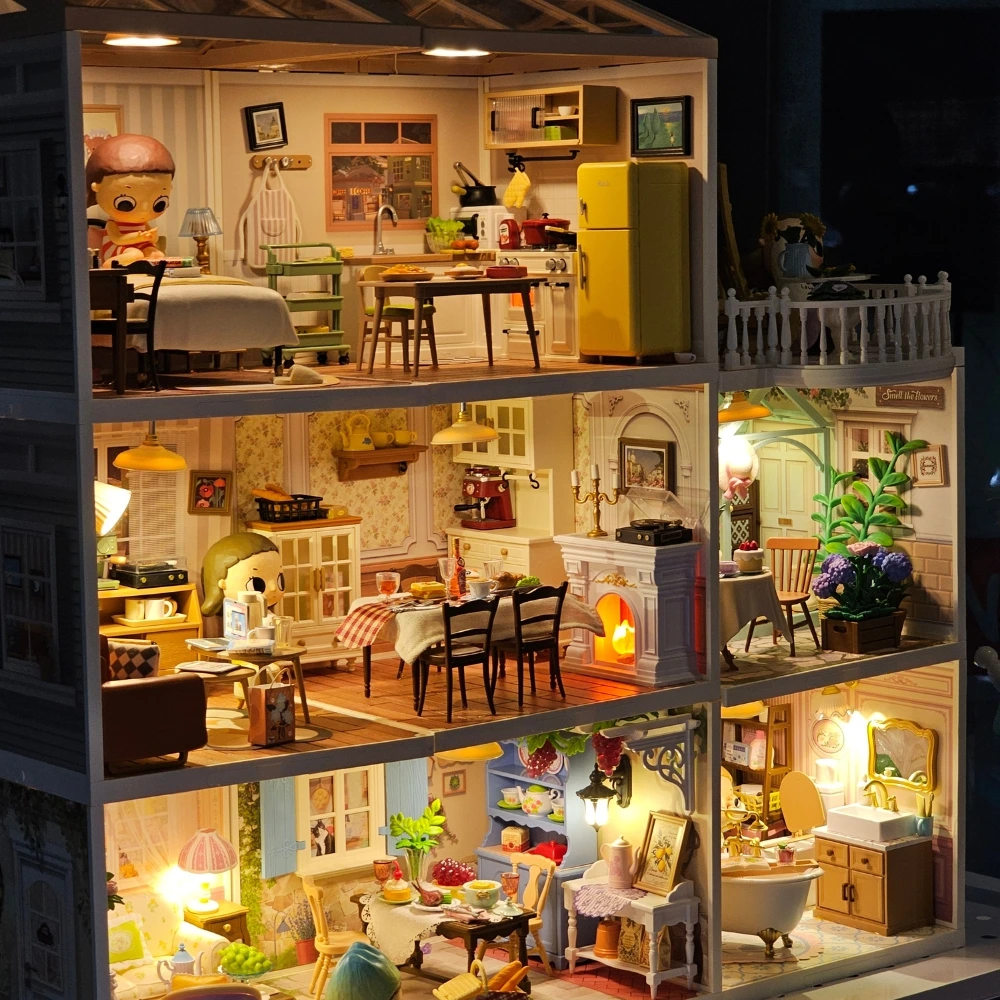
1. Miniature houses and dollhouses
Miniature bedrooms, kitchens, shelving units, and entire houses. You can build everything from scratch or decorate a pre-made wooden dollhouse.
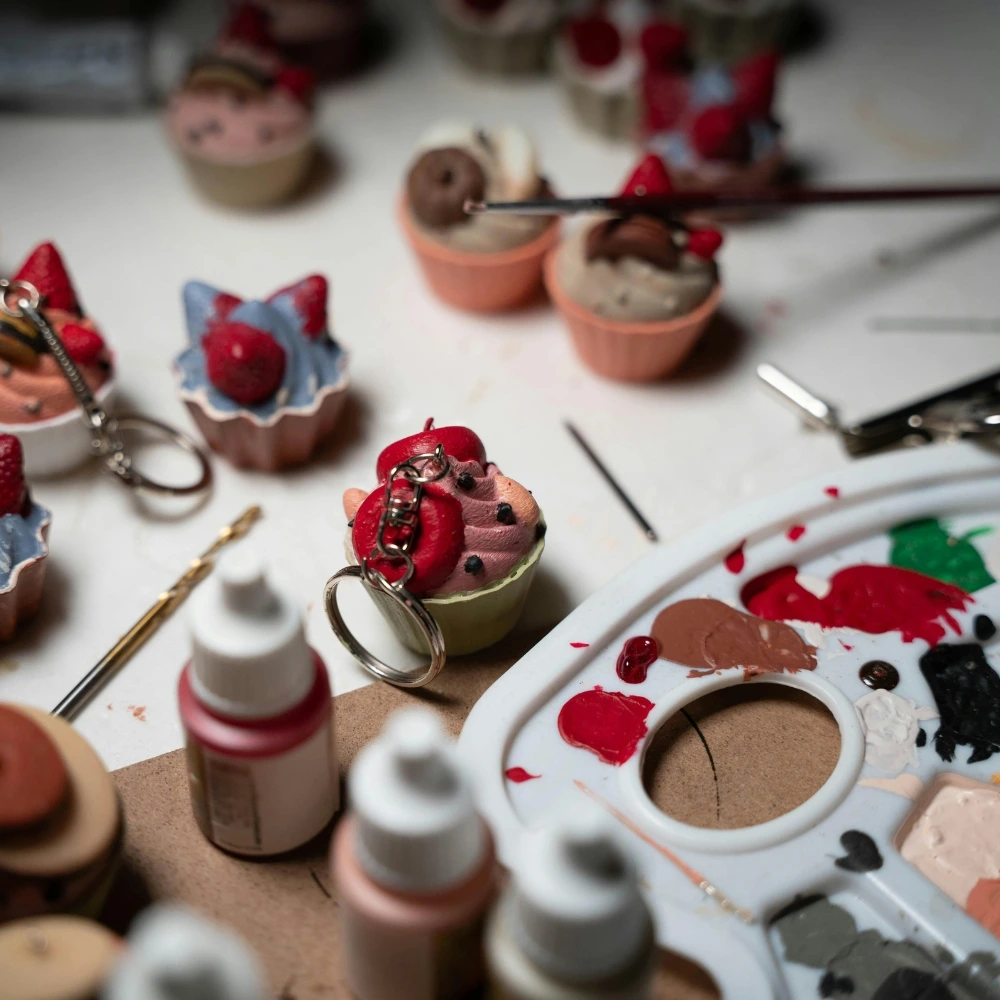
2. Miniature food
Miniature croissants, sweets, pizzas, coffee cups, and even entire bakeries. Air-dry clay and polymer clay are popular materials for these creations—a clever and simple way to get started.
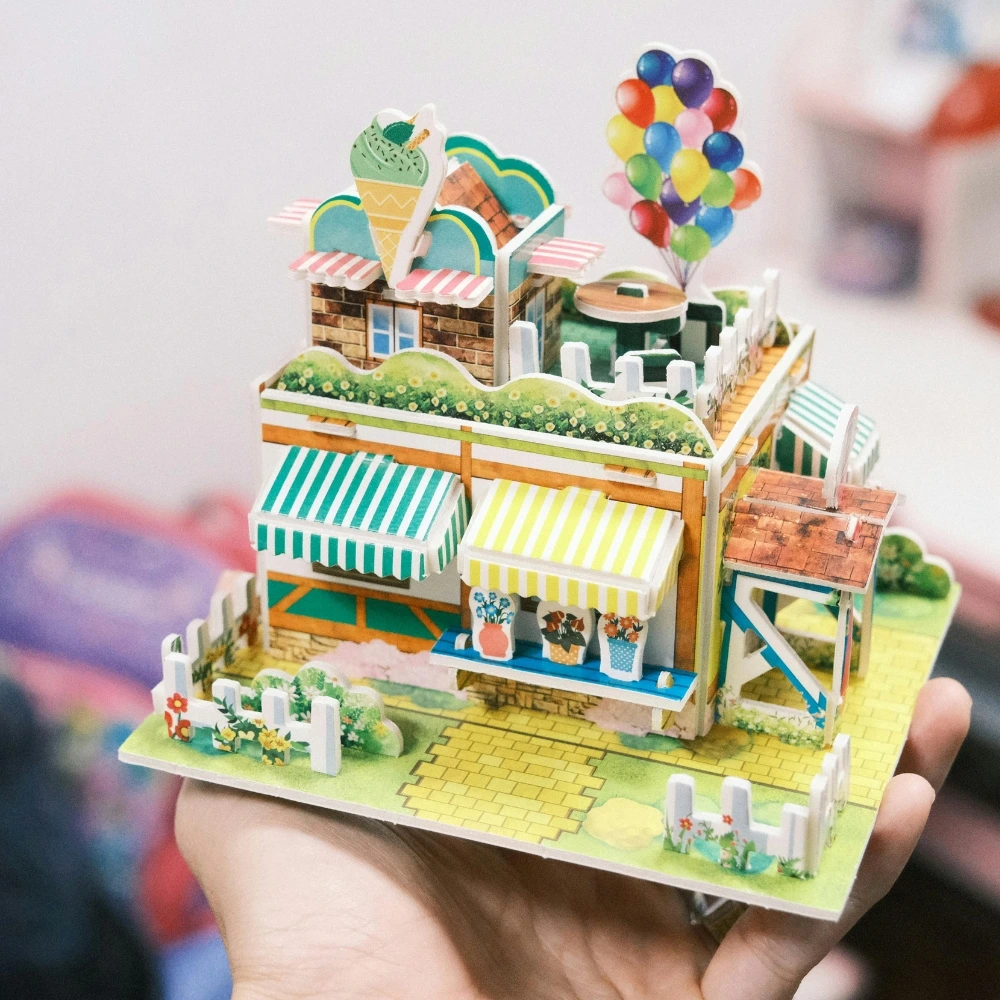
3. Miniature shops
Bookstores, flower shops, small cafés, or vintage-style shops. Here, the decor and tiny details make all the difference.
4. Fantasy-themed miniatures
Miniature forests, magical homes, scenes inspired by books or films, and fantasy worlds. You don’t have to replicate reality; you can create something entirely your own. The world of imagination offers endless possibilities to unleash your creativity!
5. Miniature gardens
Miniature gardens, plants, pathways, and small decorative scenes housed in glass containers. If you love plants and decor, you’ll adore this unique take on the hobby!
How do you get started with miniatures?
If you see elaborate builds on Pinterest or TikTok and think you need special equipment to get started, that’s not necessarily the case. For your first project, the most important thing is to choose something small and relatively simple.
Choose a small scene or a simple object
Don’t start by trying to build a three-story house complete with lighting, furniture, and a garden. Choose something specific, such as:
- A small set featuring a bed and a nightstand
- A bookshelf with tiny books
- A coffee table with cups and sweets
- A small flower bed with pots
- A magical forest in a box
The more specific your first project is, the easier it will be to figure out what materials you need.
Gather your materials
You don’t need to buy a large kit before knowing whether you enjoy this hobby. For a simple DIY miniature project, you can start with:
List of materials for beginners
- Cardboard or cardstock for the base and walls
- A ruler, a pencil, and scissors
- Glue suitable for your materials
- Acrylic paints and small brushes
- Wooden sticks or thin pieces of wood
- Air-dry clay for small objects
- Fabric, paper, and decorations
The materials you need depend on the project you are working on. For instance, a wooden dollhouse requires different materials than a small room made of cardboard. However, basic craft supplies are enough to get started. As you create more miniatures, you will discover which materials you find most useful and which best allow you to express your creativity—as these choices also depend on each creator’s personal preferences.
Calculate the dimensions
This is where the more technical part of the creation process begins.
In miniatures, getting the dimensions right is crucial. The objects you create must be in proper proportion to one another. A table that is larger than the bed, or a door that doesn’t fit into the wall, can ruin the overall look.
You don’t need to be a math expert. A sketch showing the dimensions of each object will help you stay organized before you start cutting and gluing.
Work on the structure first, then the details
Start by creating the base, the walls, and the larger pieces of furniture. Then, add colors, decorations, books, plants, and smaller items.
If you begin with small decorations without deciding where they will go, you might end up with a drawer full of miniatures and no space to actually place them.
Give your miniature a story
This is what makes a miniature scene truly stand out.
A small, open book on a desk, a cup next to an armchair, or a pair of shoes by the entryway can make a space look as if someone has just stepped out of the room.
You don’t need dozens of objects; a few carefully chosen details can make a scene far more interesting and personal.
What do scales mean in miniatures?
If you start looking for dollhouse kits or pre-made furniture, you will often come across numbers like 1:12 or 1:24.
These indicate the scale of the build—in other words, how small the object is in relation to its real-life counterpart.
1:12 means that every centimeter in the miniature corresponds to 12 centimeters in the actual object. The same principle applies to the 1:24 scale. For example, an actual table 120 cm long would measure 10 cm at a 1:12 scale and 5 cm at a 1:24 scale.
You don’t need to decide on a specific scale from day one. If you are creating a free-form composition using cardboard and clay, you can begin without strictly adhering to any particular system. However, if you intend to incorporate pre-made furniture and accessories, using a consistent scale will be very helpful.
5 mistakes to avoid when starting out.
- Choosing a project that is too large. A full dollhouse can be very time-consuming. Start with a single room or a small scene, and add details gradually.
- Buying too many materials at the beginning. Decide what you want to build first; this will prevent your drawers from filling up with materials you’ll never use.
- Ignoring proportions. A miniature object doesn’t have to be perfect, but the proportions between the various elements help the scene look more natural.
- Using too much glue. When working with miniatures, even a small amount can leave visible marks. Use the right type of glue and apply it carefully.
- Trying to make everything perfect. Your first project is for learning and practice. A piece of furniture might end up a bit crooked, or a detail might not turn out exactly as you had imagined—that’s perfectly fine, as it’s all part of the process.
Are miniatures the right hobby for you?
Miniatures might be perfect for you if you enjoy creating things with your hands, decorating spaces, building objects, or working on projects that require attention to detail. They are also a great option if you love DIY projects but are looking for something different from painting or traditional scrapbooking.
You don’t need any prior experience, a special talent for drawing, or a fully equipped workshop. A small table, a few materials, and an idea are all you need to get started.
Keep in mind, of course, that some projects can take several hours or even days to complete.
The cost depends on the materials, size, and level of detail: a simple project using recycled materials can be quite affordable, while specialized kits and pre-made accessories may be more expensive.
And if you find that you enjoy it, you can take your hobby in many different directions—from miniature food and tiny furniture to complex scenes complete with lighting and 3D figures.
Frequently asked questions about creating miniatures
What are miniatures?
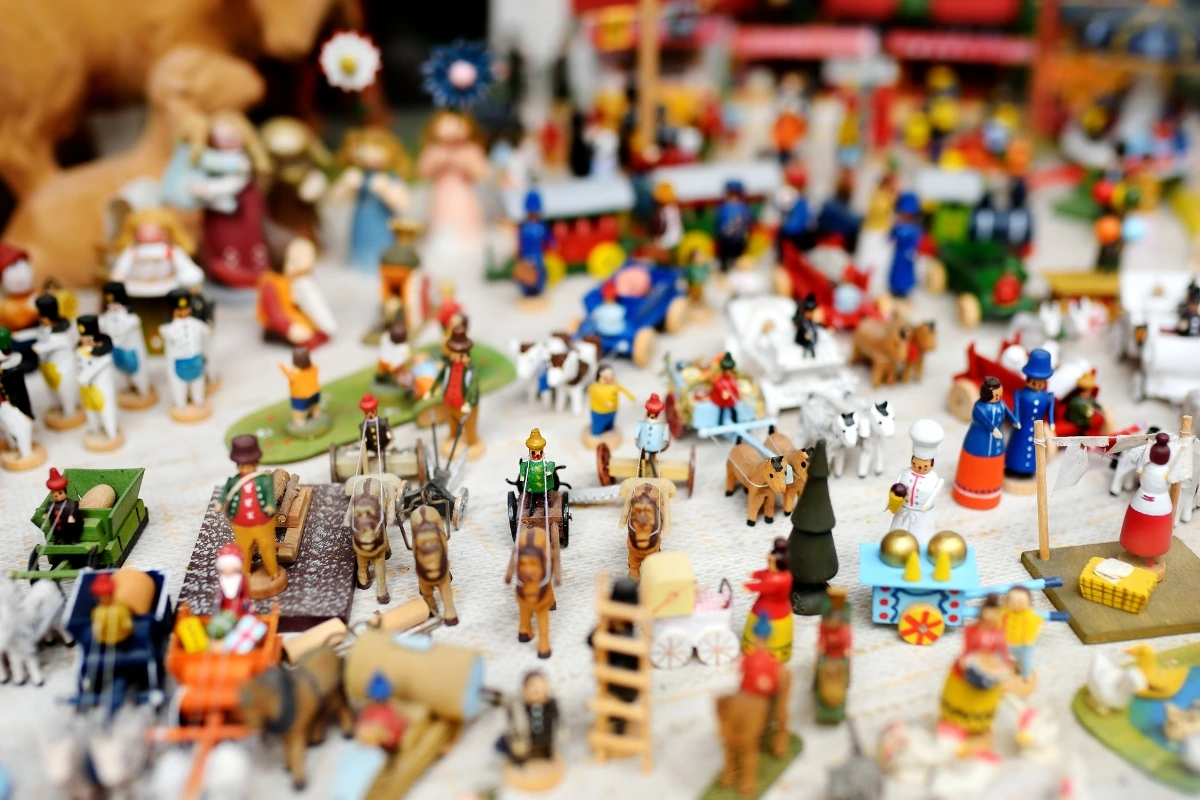
Miniatures are tiny representations of objects, spaces, or entire scenes. They can include dollhouses, furniture, food, shops, gardens, and imaginary worlds. Creating them is a hobby that combines construction, crafting, decoration, and modeling.
How can I make miniatures at home?
You can start with cardboard, glue, acrylic paints, craft sticks, and air-dry clay. Choose a small structure, plan its dimensions, and build the basic frame before adding any decorative elements.
What materials are suitable for making miniatures at home?
Cardboard, wood, paper, fabric, clay, wire, and small ornaments are some of the materials commonly used. The choice depends on whether you want to create furniture, food, plants, or entire rooms.
Why are miniatures popular?
Miniatures combine creativity, craftsmanship, and attention to detail. At the same time, these small rooms and scenes offer a way to create personal spaces on a miniature scale.
Is it an expensive hobby?
It doesn’t have to be expensive. You can start with recycled materials and simple tools, without needing to purchase specialized equipment. Costs increase if you choose specialized tools, pre-made kits, lighting, or detailed accessories.
HobbyDetective Spain is currently developing its community and catalog of experiences. In the meantime, use these ideas to explore local options, and be sure to confirm the most up-to-date information directly with each organizer.
Your first step in Spain
Look for an introductory session at workshops or cultural centers in your municipality. Compare the techniques being taught, the materials provided, the group size, and whether you will be able to complete your piece during the class. To practice at home, start with a small project and purchase only the materials you need; always check the manufacturer’s instructions, and ensure you have proper ventilation and the necessary protective gear for each product.
Original article: 2026-10-21. Edition adapted for Spain: 27 October 2026. Read the Greek original. Original author: Eleni Agiou.