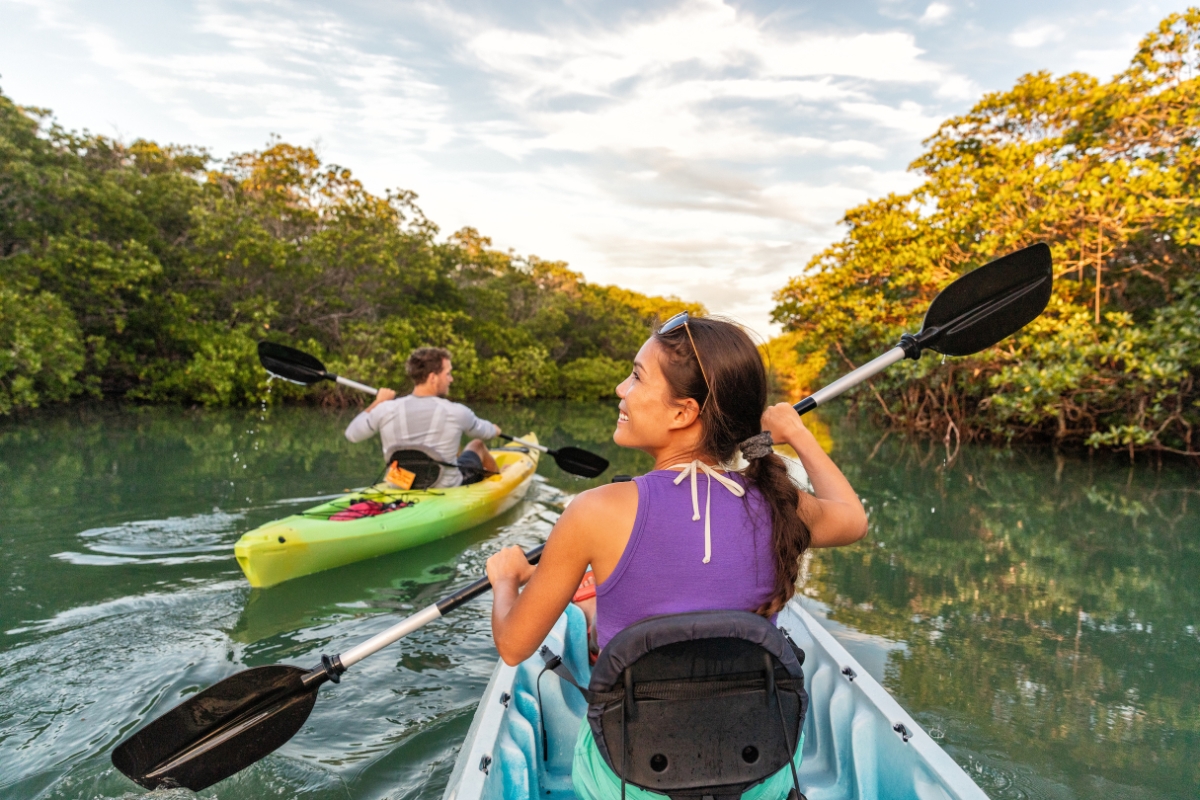
Kayaking is an exciting activity that combines adventure, exercise, and a connection with nature into a unique experience. Whether gliding peacefully across a calm lake, navigating river rapids, or exploring coastlines and bays, kayaking offers a unique perspective on the world around us.
In fact, kayaking is not limited to inland waters. The sea is an exciting playground for kayaking enthusiasts, offering unique experiences such as exploring remote beaches, observing marine life, or even taking on the challenges of waves and tides. Sea kayaking often requires different techniques and equipment compared to kayaking on lakes or rivers, which adds even more variety to this sport.
Whether paddling in fresh water or at sea, kayaking is a way to explore coastal areas, enjoy observing wildlife, and experience the adrenaline of moving through the water. It offers the opportunity to reach areas inaccessible by other means, enjoy the tranquility of nature, or test one’s endurance in more demanding conditions.
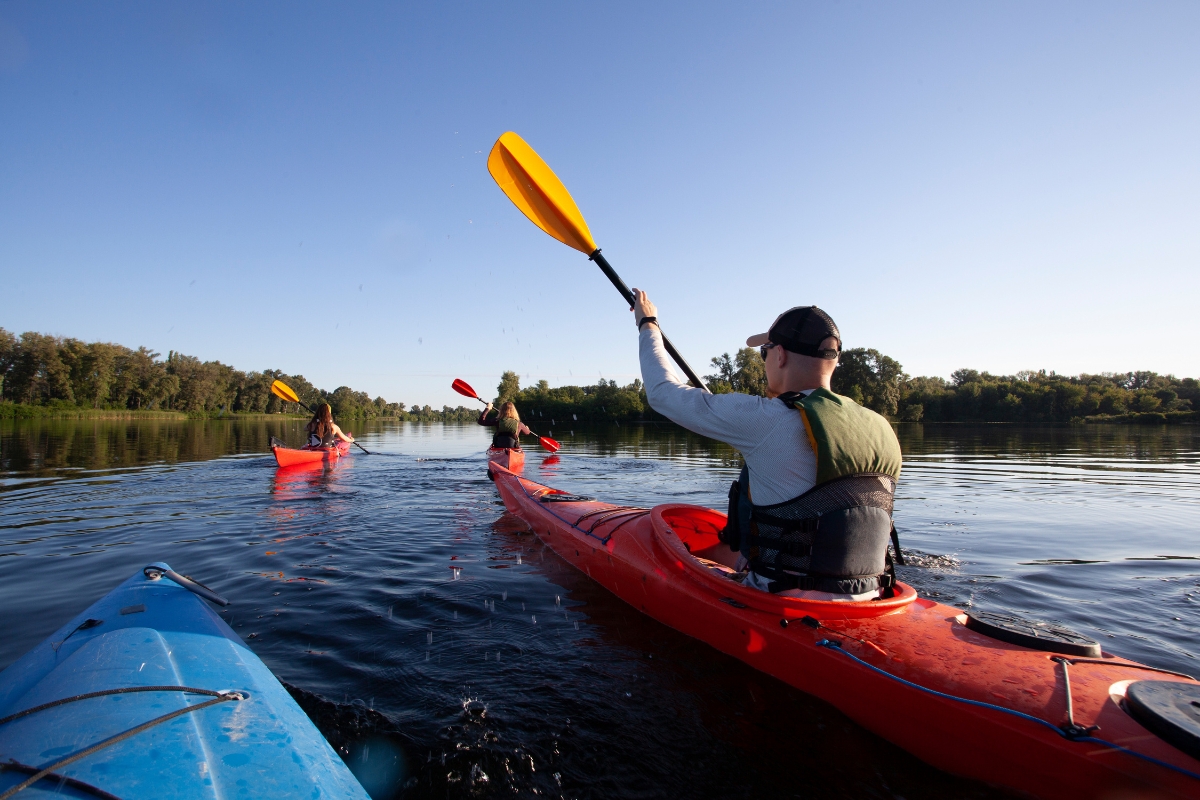
However, like any outdoor activity, kayaking carries certain risks, especially in open waters such as the ocean. Safety should always be the top priority for every kayaker, whether a beginner or experienced. Understanding and practicing the correct techniques not only improves performance but is also vital for safety on the water.
1. How to properly enter and exit a kayak
- Place the kayak parallel to the shore in shallow water.
- Hold the paddle perpendicular to the kayak to maintain balance.
- Sit in the center of the kayak and place your feet inside.
- To exit, reverse the process.
2. Basic paddling technique
- Hold the paddle with your hands spaced slightly wider than shoulder-width apart.
- Submerge the paddle completely in the water.
- Pull the paddle backward, using your abdominal muscles rather than just your arms.
- Repeat the movement, alternating between both sides to maintain a straight path.
3. Turns and maneuvers
- For a simple turn, paddle on only one side.
- For a quick turn, use the “sweep” technique: move the paddle in a wide arc from the bow to the stern.
- To turn in place, use opposing strokes on both sides.
4. Maintaining balance
- Keep your body low and your center of gravity near the center of the kayak.
- Use your knees and thighs to “hug” the kayak.
- In waves, relax your body and “follow” the movement of the water.
5. Self-rescue technique
- Practice the “wet exit” technique: how to safely exit the kayak if it capsizes.
- Learn the Eskimo roll technique to right the kayak without exiting.
- Practice getting back into the kayak from the water.
6. Reading the water
- Learn to recognize currents and how to use or avoid them.
- Watch out for obstacles, such as rocks or tree trunks beneath the surface.
- Understand how the wind and waves affect your kayak.
7. Techniques for challenging conditions
- In strong winds, lower your center of gravity and use shorter, more frequent paddle strokes.
- In large waves, try to keep the kayak perpendicular to the waves.
- In fast currents, look toward where you want to go, not at the obstacles.
8. Communication and Signals
- Learn basic hand signals to communicate with other kayakers.
- Always carry a whistle or other signaling device with you.
- Agree on a communication plan with your group in advance.
9. Preparation and Safety Equipment
- Always wear a life jacket suitable for kayaking.
- Wear appropriate clothing for the weather conditions (wetsuit, drysuit, etc.).
- Carry emergency gear (first aid kit, flashlight, extra food and water).
10. Training and Ongoing Practice
- Take classes with certified instructors.
- Practice regularly in a controlled environment.
- Stay up to date on new techniques and safety equipment.
Remember that kayak safety is not just about technique; it is also about good judgment. Always check the weather forecast, inform someone of your plans, and do not overestimate your abilities. With proper preparation and practice, kayaking can be a safe and enjoyable experience for everyone.
Your First Step in Spain
Look for a beginner-level activity near you and explain your experience level before booking. Confirm what equipment is provided, what the requirements are, and check the insurance and bad-weather policies. When outdoors, check the specific advisories and restrictions for that location—coastal areas, inland waters, and islands all have different conditions. Choose an activity based on your level of preparation and the guidance of professionals—not just on a photograph or a difficulty rating.
Original article: 2024-08-19. Edition adapted for Spain: 27 October 2026. Read the Greek original. Original author: Eleni Agiou.