Get ready for a culinary journey that will take you straight into the heart of Greek tradition! Greek flavors have ancient roots. In this article, we will explore some of the most traditional Greek recipes—dishes passed down through generations that remain favorites at the table, whether for everyday meals or special occasions.
Moussaka: The king of Greek cuisine
Delicious layers of eggplant, potato, and minced meat, topped with a creamy béchamel sauce and baked to golden perfection. Moussaka is ideal for a Sunday dinner with friends and family; it is the quintessential Greek dish, featuring a combination of ingredients that everyone loves. Preparing it requires patience—a great deal of patience—and love. Let’s take a closer look at this impressive dish:
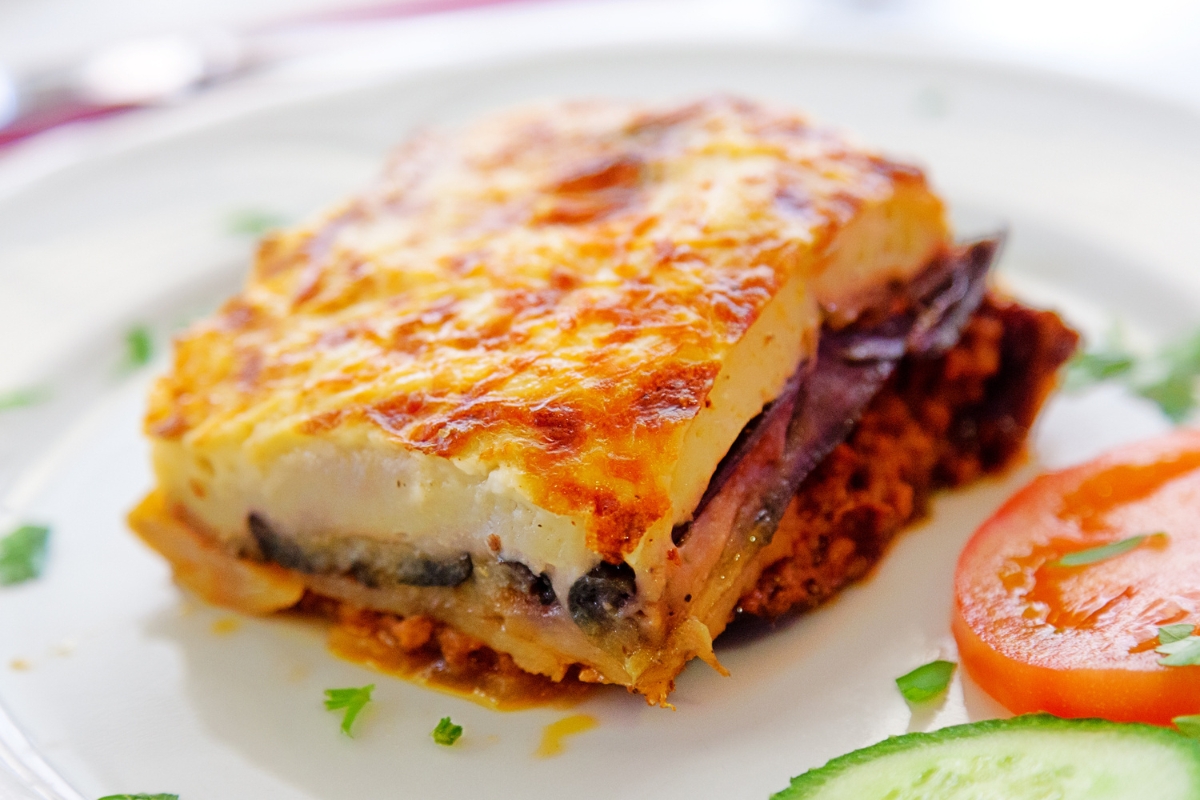
Moussaka, in its most classic form, consists of three basic layers: eggplant, minced meat, and béchamel sauce. Each layer creates a unique combination and contributes to the dish’s unmistakable flavor. The eggplants and potatoes are sliced and lightly fried until golden and tender. The minced meat is cooked with onion, garlic, tomato, and various herbs and spices—such as cinnamon, nutmeg, and bay leaf—which give the dish its characteristic aroma. The top of the moussaka is covered with a thick, creamy layer of béchamel sauce, made from butter, flour, and milk, and seasoned with a touch of nutmeg. Some people even add grated cheese for a bolder flavor!
Moussaka is a dish that requires time and attention to prepare, but the effort is well worth it.
Souvlaki: The quintessential Greek street food
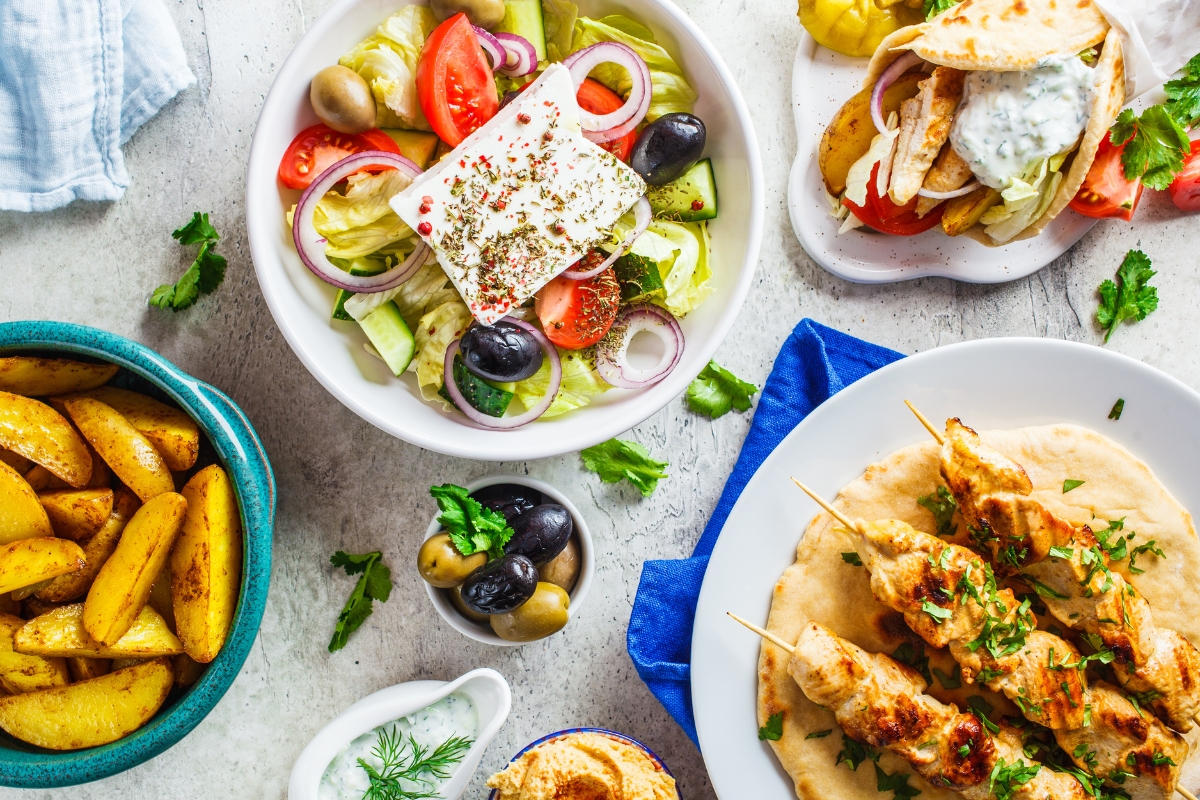
Now, let’s turn to Greece’s most famous street food: souvlaki. What can be said about this simple yet incredibly delicious treat? Small pieces of meat are threaded onto a skewer and typically served with pita bread, potatoes, tomato, onion, and tzatziki. Whether you prefer pork or chicken, souvlaki is the perfect choice for a quick and satisfying meal.
The heart of souvlaki is the meat, and quality is everything. Pork is the most traditional option, but chicken is equally delicious and lighter. The meat is typically marinated in a mixture of olive oil, lemon, oregano, salt, and pepper, which imparts an intense flavor and exquisite juiciness. When roasted, it develops a wonderful caramelized crust that makes every bite divine.

Souvlaki is usually served in a fluffy pita bread (ideally handmade), which provides a unique texture in every bite. The addition of potatoes, tomato, onion, and tzatziki—or, if you are from northern Greece, ketchup and mustard, which are essential there—only enhances the experience.
Souvlaki combines simplicity with exquisite flavor; if you are lucky enough to find an authentic, high-quality souvlaki restaurant, your meal will be nothing short of fantastic. From Thessaloniki to Athens, every city and neighborhood has its own go-to spots for authentic souvlaki, with each region and establishment harboring its own flavor secrets—reasons why souvlaki is beloved by young and old alike.
Don’t forget to pair it with a cold beer or a soft drink for the full experience!
Dolmadakia: Little Stuffed Wonders
Though small in size, dolmadakia are an explosion of flavor! Grape leaves are filled with rice, herbs, and sometimes minced meat, then carefully wrapped and slow-cooked until tender and delicious. They make the perfect appetizer to accompany ouzo! It’s easy to see why they are so popular throughout Greece.
Grape leaves undergo various cleaning and preparation processes before use, which gives *dolmadakia* their unique flavor and texture. The filling for *dolmadakia* is key. The basic combination includes rice, chopped onion, and various herbs such as dill, parsley, and oregano. In many Greek recipes, ground meat is also added for extra flavor.
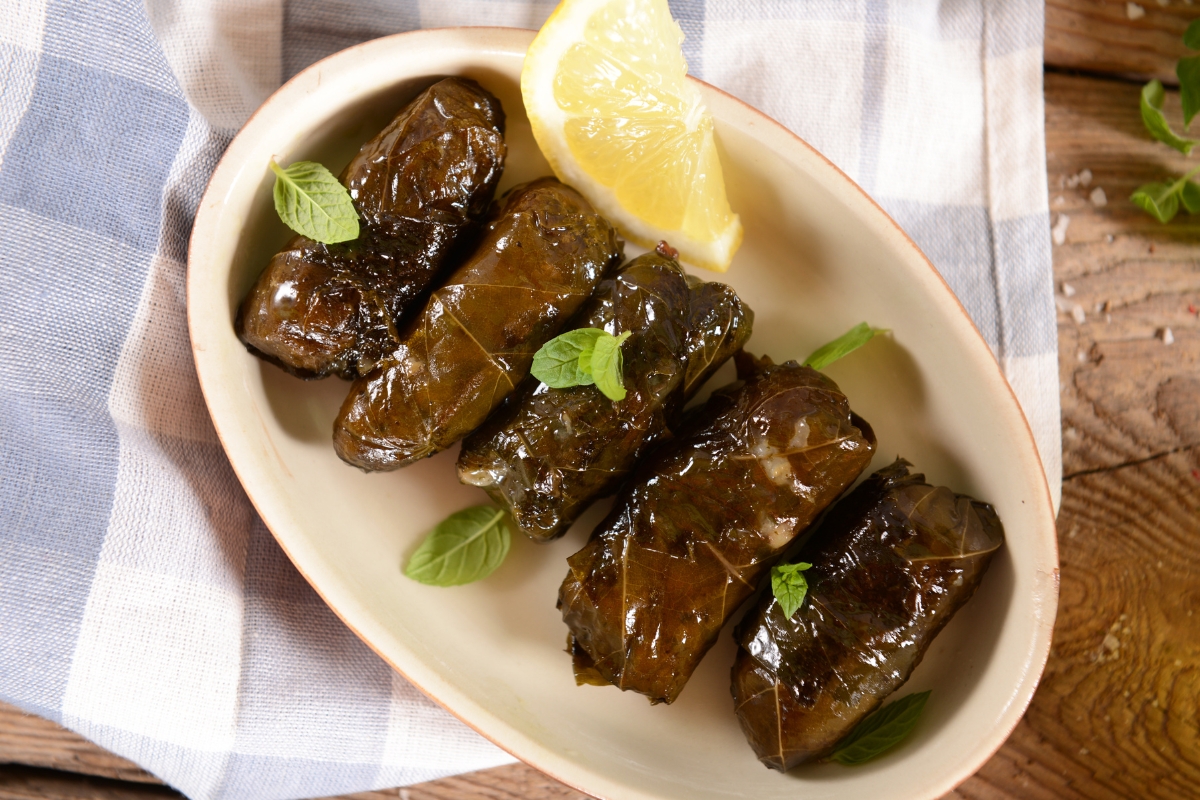
Preparing them requires following a specific technique—which might seem difficult at first, but with a little practice, you’ll find it’s a piece of cake! The grape leaves are laid out, filled with the mixture, and carefully wrapped, ensuring the edges are sealed well so the filling doesn’t spill out during cooking. Using the right technique ensures that the *dolmadakia* maintain their perfect shape and flavor. They are typically cooked over low heat in a pot with a bit of water and olive oil, then covered with extra grape leaves and a plate or dish to keep them from coming undone while they cook.
Whether served as an appetizer or a main course, *dolmadakia* are the perfect choice for bringing a Greek touch to your table!
Pastitsio: The ultimate comfort food in Greek cuisine
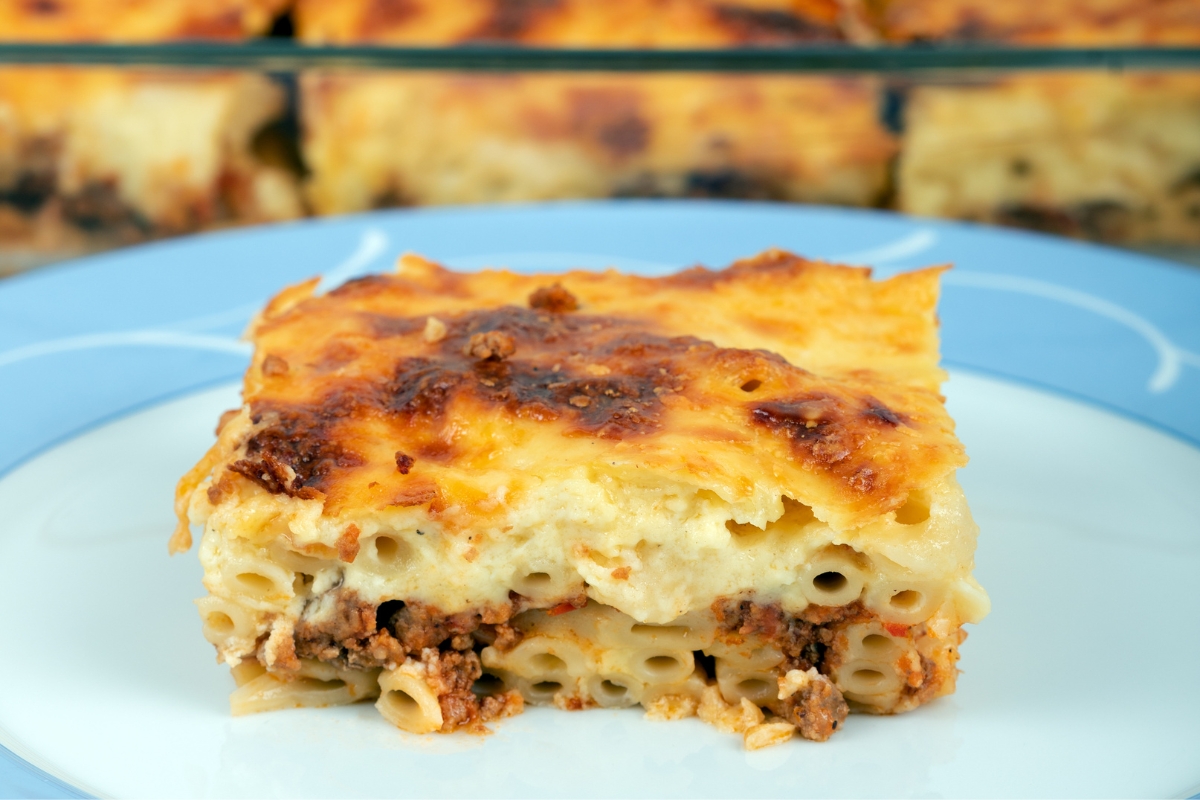
If moussaka is the king, then *pastitsio* is the prince of Greek cuisine. It’s a dish that combines pasta, ground meat, and béchamel sauce—a delicious blend that is sure to be a hit with both kids and adults!
The foundation of pastitsio is macaroni, which is typically boiled until *al dente* and mixed with an egg and a bit of cheese for added flavor and consistency. The macaroni should not be too soft, as it will continue to cook and absorb liquids while in the oven. Ground meat is the heart of pastitsio. Usually, ground beef or a meat blend is used, cooked with onion, garlic, tomato, and herbs such as cinnamon, nutmeg, and bay leaf. The top layer of the pastitsio is a béchamel sauce—which, as we noted with moussaka, provides that special touch to the dish. In a baking dish, layer the pasta and the ground meat mixture, then pour the rich béchamel sauce over the top, spreading it into an even layer. The pastitsio is baked until the béchamel reaches its signature, perfect color.
Country-style salad: simplicity at its best
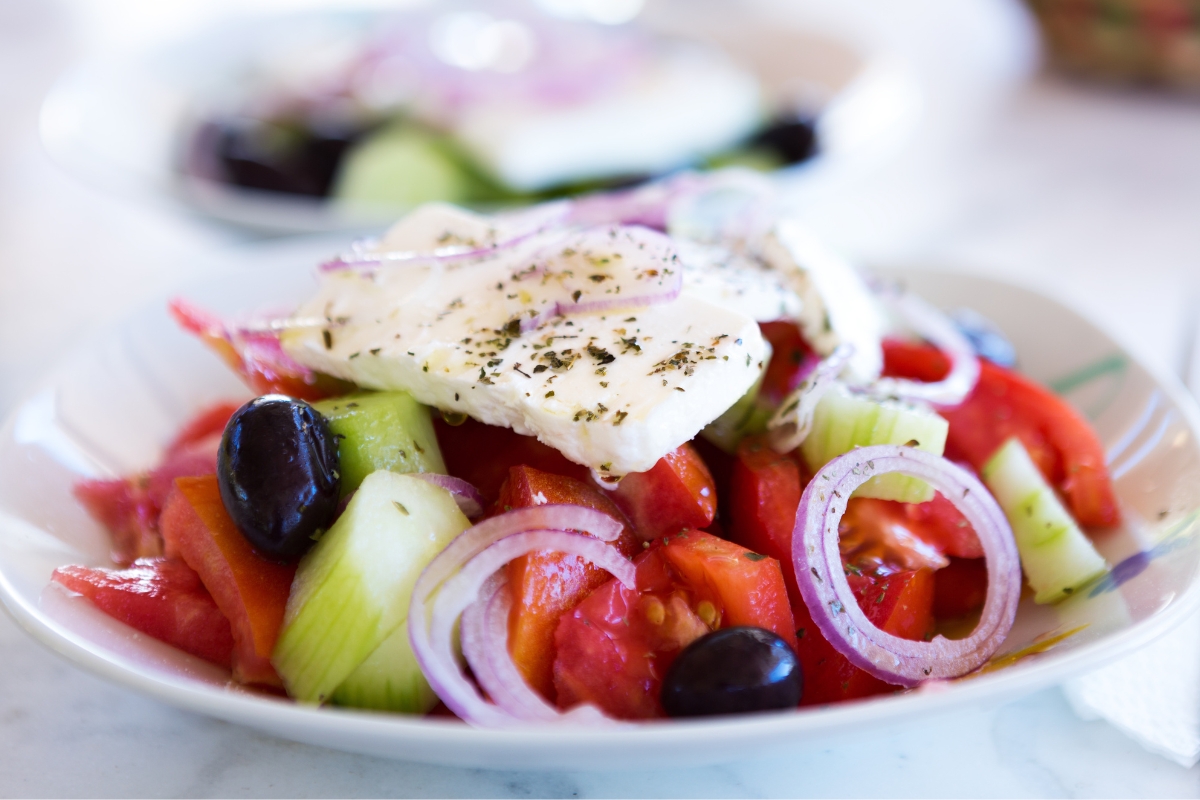
The country-style salad is proof that the simple things in life are the best. Fresh tomato, cucumber, onion, bell pepper, olives, and feta cheese—all dressed with extra virgin olive oil and oregano. You don’t need anything else to enjoy a taste of summer in every bite. It’s the ideal side dish for any meal, though, as you well know, it’s also a fantastic dish all on its own!
Tomatoes are the main ingredient in the country-style salad. Choose ripe, firm tomatoes to give your salad the best flavor and texture. Sliced cucumber adds a fresh, crunchy texture. Onion—usually thinly sliced or cut into rings—offers a slightly sharp flavor that pairs wonderfully with the other ingredients. Feta cheese, typically placed on top of the other ingredients, provides the rich, savory flavor needed to elevate the dish.
Spanakopita: The pie we all love
We conclude with the spinach pie, the most beloved pie among Greeks. It features a crispy crust filled with fresh spinach, herbs, and, of course, feta cheese. It’s the perfect snack for any time of day, from breakfast to dinner. And the best part? You can find it in every corner of Greece—from the local neighborhood bakery to the most traditional tavernas.
Spinach—what else?—is the main ingredient in spinach pie. It is generally used fresh, though frozen spinach can also be used. The spinach gives the pie a subtle bitterness and a wonderful texture. Feta cheese provides its signature flavor. Whether crumbled or grated, it adds a salty, creamy touch that balances the bitterness of the spinach. The most popular choice for spinach pie is phyllo dough, which offers a light, crispy texture—though this is by no means a hard-and-fast rule. You can use any type of dough you like, such as rustic phyllo, puff pastry, or even *kourou* dough!
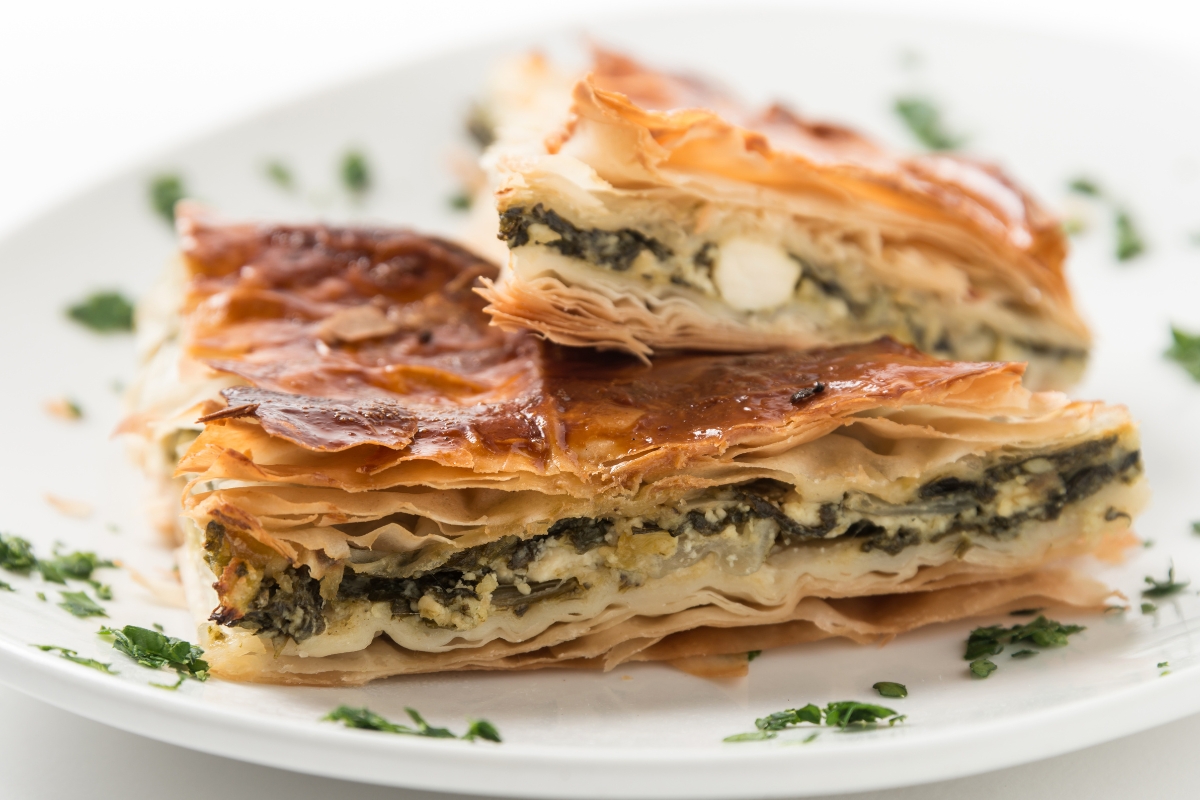
Sauté the spinach and herbs until they release their wonderful aromas, then add the feta cheese and—if you wish—an egg.Place the phyllo dough in a baking dish, add the filling, cover with the remaining phyllo, and it’s ready for the oven.
Greek cuisine is a delightful adventure that blends tradition, simplicity, and warmth. Traditional Greek dishes are true treasures, each with its own unique flavor and character.
Don’t miss the first part of our tribute to traditional Greek dishes!
Recreating these flavors from Spain
Look for ingredients at local shops, and be sure to check labels for allergens. You might plan a cooking session focused on a single dish, explaining which Greek recipe inspired you—just be careful not to present your own personal adaptation as the only “authentic” version. You don’t need to travel to discover a culinary tradition, but it is important to distinguish its original form from any changes you make at home.
Original article: 2024-08-23. Edition adapted for Spain: 27 October 2026. Read the Greek original. Original author: Eleni Agiou.