Are you ready to dive into the magical world of manga or comics and create your own characters and stories? If so, all you need is imagination, a bit of creativity, and… this article to guide you on your journey!
Inspiration: Where Do We Start?
Every artist begins with an idea. Inspiration can come from anywhere: something you saw on the street, a movie that left an impression on you, or an everyday scene you experienced. When creating manga or comics, the most important thing is to find the theme that drives you. What kind of story do you want to tell? Do you want to write about adventures in a fantasy world, explore relationships, or craft a psychological drama that captivates the reader? Whatever you choose, the most important thing is to believe in it and love it!
Character Creation: From Mind to Page
Now that you have your idea, it’s time to start creating your characters. These are the heroes and anti-heroes who will bring your story to life. It’s not enough to just think about their appearance; you must also ask yourself who they really are.
What is their personality? Are they optimistic, shy, energetic, or melancholic? A character’s personality often determines their appearance and how they interact with other characters.
What is their background? Are they former convicts trying to turn their lives around? Or perhaps a young warrior seeking revenge? Your characters’ backstories will make them feel more authentic and compelling.
How do you draw them? A manga hero typically has large, expressive eyes and a slender silhouette, whereas in Western-style comics, you might play with more dynamic lines and muscular physiques. But remember, outward appearance is merely the surface layer. It is the characters’ personalities and internal contradictions that truly make them unique.
The Story: From Concept to Plot
The plot is the backbone of your story. Think of it as a series of events that unfold through rising action, filled with twists and emotionally charged moments. The first step is to decide what kind of story you want to tell. Here are a few questions to help you:
- What are the main conflicts in your story? Is it a conflict between good and evil, or something more complex—such as a character’s internal struggle with their own insecurities?
- What are the beginning, the development, and the ending? Consider how your story begins, how it unfolds, and what its final message is.
- What is the central theme? Do you want to highlight the value of friendship, love, self-discovery, or perseverance? Every story needs a solid thematic core.
If you have an idea for the main plot, break it down into smaller parts. Identify the most significant story beats and how they evolve. It will be easier to work incrementally, adding new elements as you go along.
The Magic of Sketching: Illustrations That Tell Stories
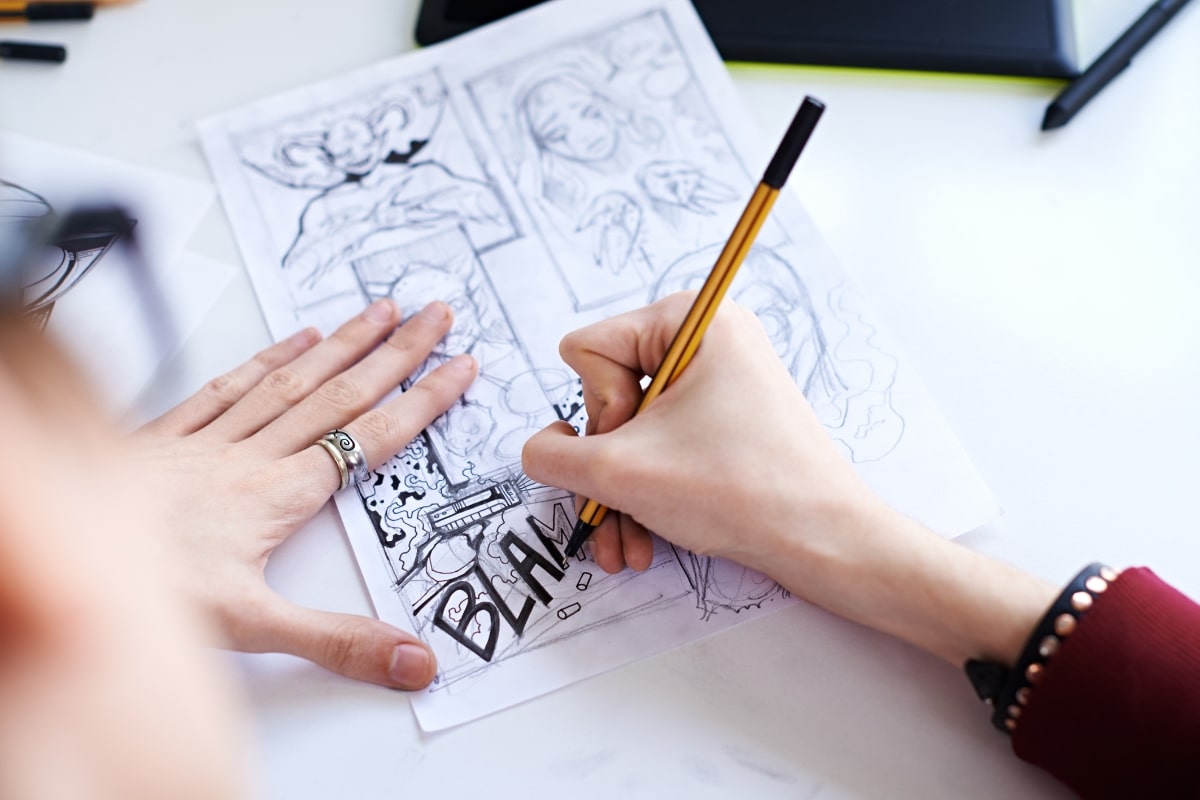
When creating manga or comics, drawing and illustration are just as important as the story. The way you draw your scenes and characters can heighten emotional tension or add dynamism to your pages.
Don’t worry if your technique isn’t amazing right from the start. The most important thing is to focus on the emotion you want to convey. Use bold lines for action, and soft, fine lines for romantic or quiet scenes. Keep in mind the defining characteristics of the genre: large eyes for manga, or bold lines and shadows for comics.
The layout of the panels is also important. How will you organize the narrative across your pages? Sometimes, creating the perfect panel can be even more compelling than the scene it contains! Experiment with composition and movement within your pages to make the storytelling more dynamic.
Here are some general tips to keep in mind when drawing your characters!
Eyes: In manga, the eyes are the “heart” of a character, as they are large and expressive. By playing with the size, placement, and shape of the eyes, you can convey different emotions (for example, larger eyes to suggest innocence, or smaller eyes to imply mystery or determination).
Body and movement: Work on the character’s anatomy (or how you choose to exaggerate it) to highlight their personality. For instance, in manga, large heads paired with smaller bodies often evoke a sense of innocence or youth.
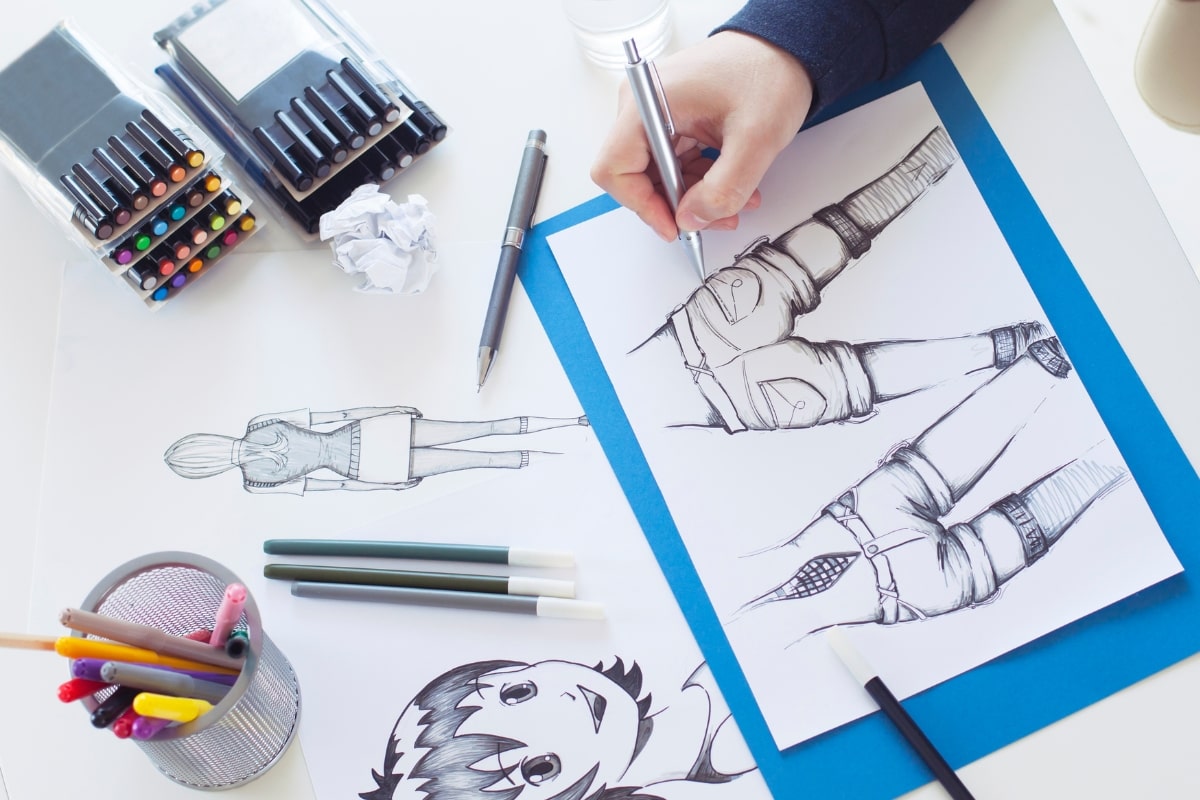
Attire: Clothing says a lot about a character’s personality. An outfit might be simple, but the choice of style or color can express character. Consider whether your character is cool or clumsy, and design their clothing accordingly.
Shading can bring life and depth to your images, making them more dynamic. In manga, shading is often done using cross-hatching or dots, creating contrast between light and dark.
- Simple shading: If you want your shading to be more interesting, use bold lines and small areas of shadow instead of a solid, uniform color. This will create greater tension and depth.
- Light and shadow: Think about where the light is coming from in each scene and how to highlight it. If the light comes from above, the shadows will be more intense on the lower parts of the characters or objects.
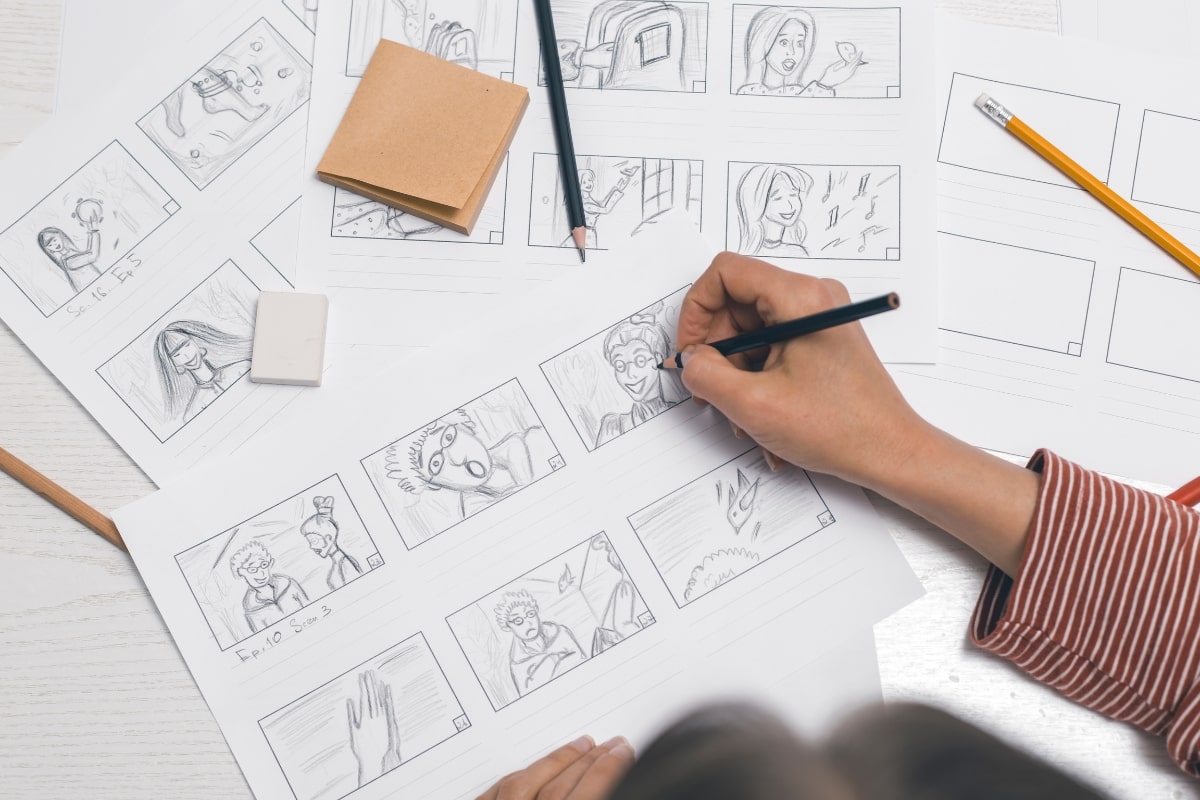
The arrangement of panels (or frames) is just as important as the design itself. When organizing your panels, think about how you want to guide the reader’s gaze.
- Panel variety: You can use smaller panels for quieter or everyday scenes, while larger panels can highlight action or moments of high emotional intensity.
- Viewing angle: Experiment with perspective! You can draw a scene from above, from the side, or even from below, thereby creating different tensions and atmospheres within the story.
- Flow and fluidity: The transition between panels should feel natural. Strive to guide the reader through the story without causing confusion. If the action is fast-paced, use panels that demonstrate continuous movement.
Action is one of the most exciting aspects of manga and comics, yet it is also one of the most challenging to illustrate. Focus on accurately sketching movement, character reactions, and expressions.
- Movement: Use motion lines—or “speed lines”—to depict rapid action. These lines evoke a sense of speed and tension.
- Perspective: Perspective plays a vital role in action sequences. Do not hesitate to draw scenes from “unconventional” angles to emphasize the intensity of the moment.
From sketch to final piece: Coloring and editing
Once you have completed your initial sketches, it is time to add color. In manga, black and white typically predominate, often utilizing shading and cross-hatching. In Western-style comics, colors tend to be more intense and vibrant.
If you are working digitally, there are numerous applications and software programs available to assist with the editing process, such as Photoshop or Clip Studio Paint. If you work in a traditional medium, you can use watercolors, pencils, or markers to add color, depending on the atmosphere you want to create.
Share your creation!
Now that you have your story and your characters, it’s time to share them with the world! Start a blog or create a social media page to showcase your progress and engage with other artists and readers. You can post short scenes from your story or even create your first comic strips to see how the audience reacts.
Creating manga or comics is a fantastic way to express your imagination and develop your own world. Remember: the most important thing is to enjoy the process and grow. The characters and stories you create have the power to come to life and influence others—so let them shine!
And now… get creating!
Your first step in Spain
Look for an introductory session at workshops or cultural centers in your local area. Compare the techniques being taught, the materials provided, the group size, and whether you’ll be able to complete your project during the class. If you want to practice at home, start with a small project and buy only the materials you need; always check the manufacturer’s instructions, and ensure you have proper ventilation and the right protective gear for each product.
Original article: 2025-04-01. Edition adapted for Spain: 27 October 2026. Read the Greek original. Original author: Eleni Agiou.