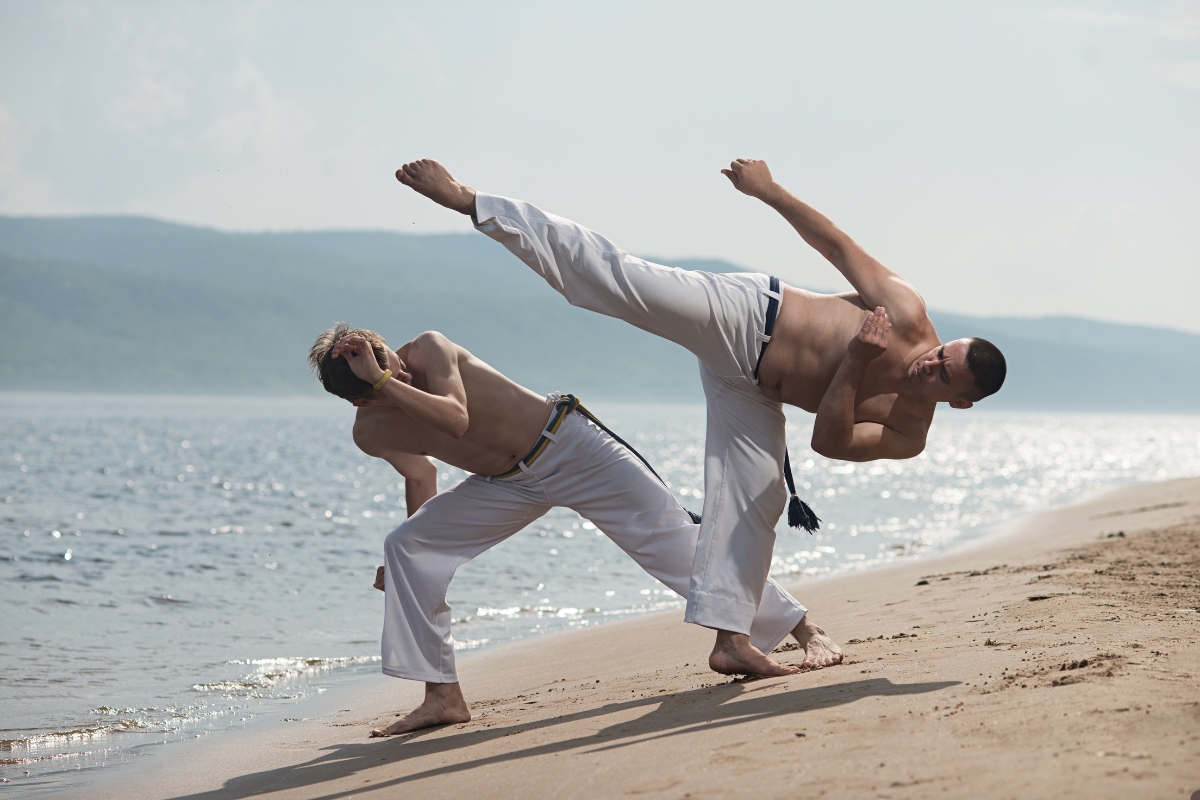
Capoeira is a truly unique art form, as it combines elements of dance, martial arts, and music. It is a highly expressive form of training rooted in African tradition.
Capoeira has gained global recognition; it is an important part of Brazil’s cultural heritage and has become a symbol of resistance and cultural identity. Every year, numerous international capoeira festivals and competitions are organized around the world, attracting thousands of participants and helping to promote and spread this art form—for example, the International Capoeira Festival in Brazil or the International Capoeira Festival in the Philippines.
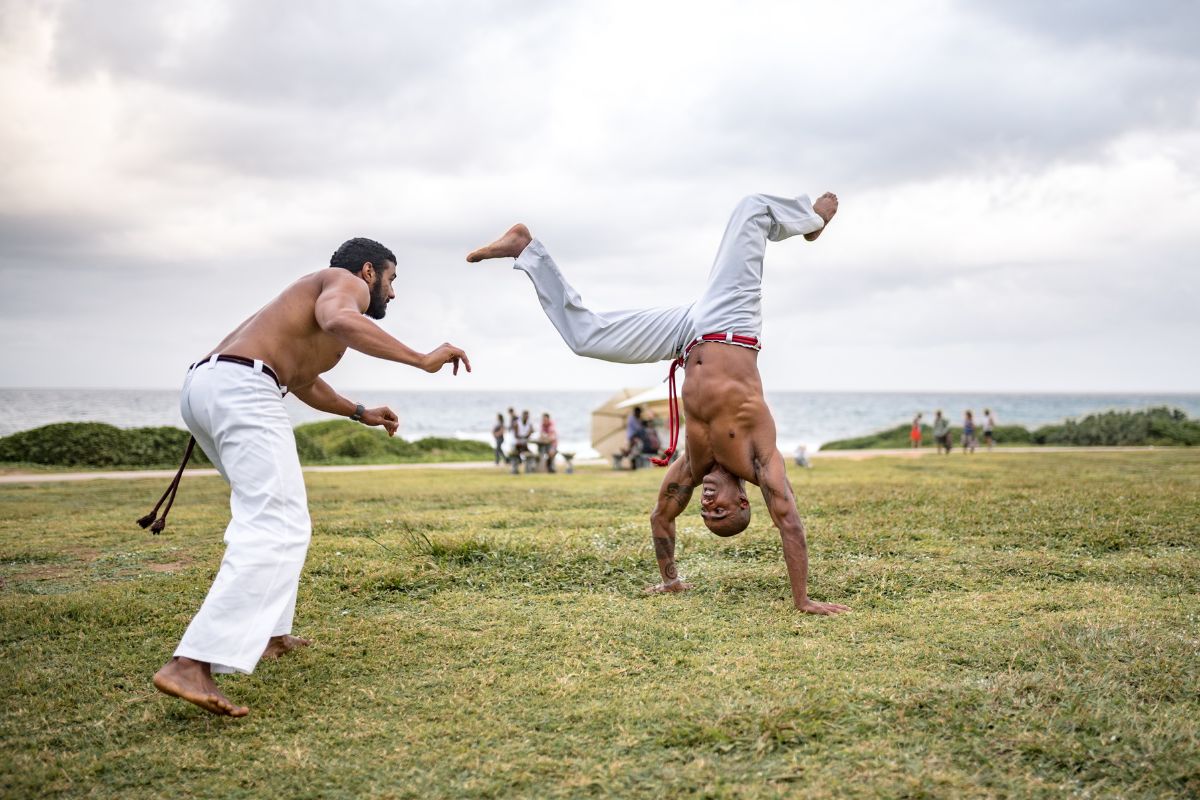
But let’s take a closer look at the origins of capoeira:
Capoeira was developed in the 16th century by African slaves who had been transported to Brazil from Africa. In their desire to preserve their cultural identity and resist oppression, these slaves created a form of martial art combined with a dynamic dance.
There are various styles of capoeira, which are distinguished by their intensity, rhythm, and the characteristics of their movements.
Capoeira Styles
- Angola
This is the most traditional form of capoeira. It features a slower rhythm and focuses on low-to-the-ground movements and precise execution. The goal is strategic interaction between opponents.
- Regional
Created by Mestre Bimba in the 1930s, this is a more modern form of capoeira that emphasizes technical training, fast rhythms, and a greater number of acrobatics and jumps. The focus is on effective self-defense and attacking.
- Contemporânea
Combining elements from various capoeira styles and cultures, it incorporates numerous modern techniques and movements, allowing for the creative expression of the practitioners.
- Senzala
Influenced by various capoeira masters and schools, it maintains a traditional philosophy while incorporating modern adaptations.
- Regional de Bimba
Also created by Mestre Bimba, this style offers a more structured approach, featuring a defined series of movements and techniques. It is characterized by intense movements, including impressive acrobatics and kicks.
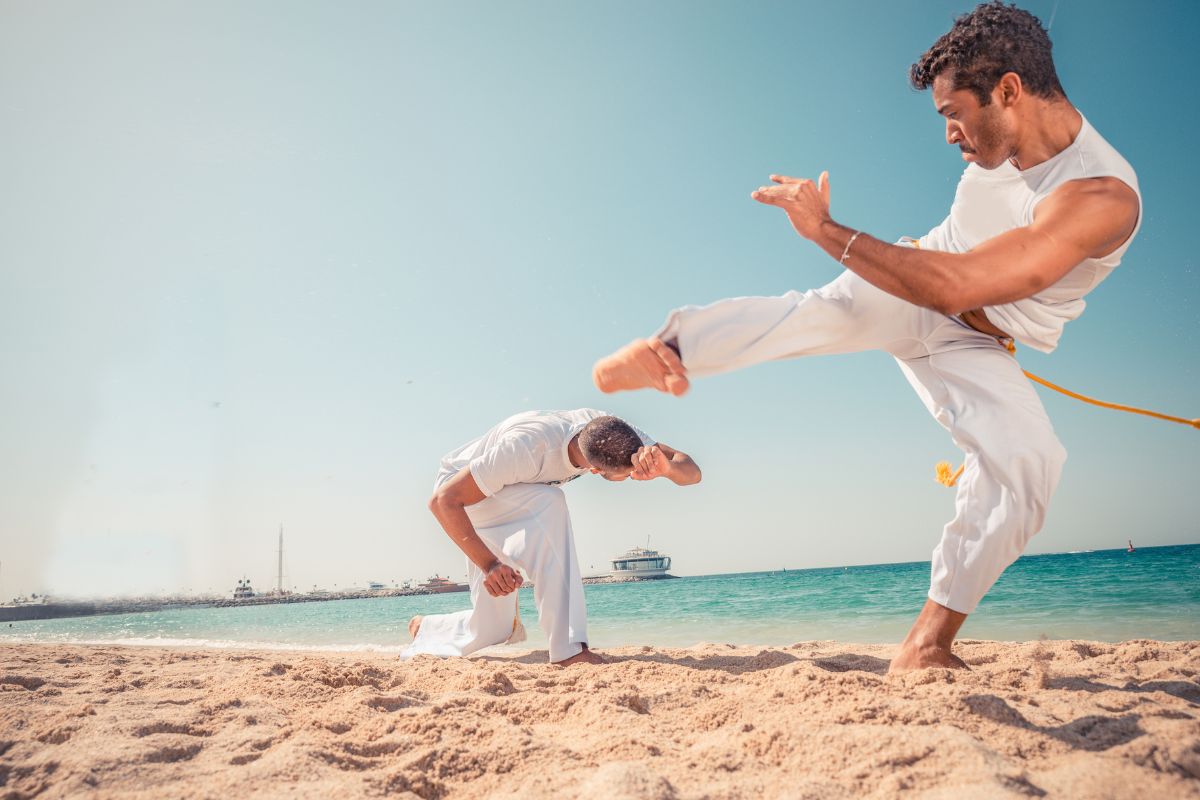
Basic Capoeira Techniques
- Ginga
This is the foundation for all other capoeira movements. It is the characteristic, controlled shifting of weight from one foot to the other, which helps the practitioner maintain balance and flexibility. In Portuguese, the word “ginga” means “swaying,” “movement,” or “rhythm,” and it serves as the basis of capoeira: a continuous movement that provides the rhythm necessary for transitioning between different techniques. The body remains low, with the knees slightly bent, to ensure better balance and flexibility.
- Kicks
Kicks, as one might easily understand, encompass various types of strikes, each with its own unique technique, rhythm, and purpose. There are both offensive and defensive kicks; examples include *Meia Lua de Frente*, *Meia Lua de Compasso*, *Armada*, *Queixada*, *Martelo*, and *Bênção*. In capoeira, kicks are executed in combination with other movements to create a continuous flow. A crucial factor for the success of a kick is the practitioner’s balance, which is rooted in the *Ginga*. These kicks possess a distinct dynamic that infuses capoeira with intensity and vitality.
- Acrobatics
Acrobatic movements are, without a doubt, the most impressive element of capoeira. Through acrobatics, the practitioner expresses themselves and develops their own personal style. However, their function goes beyond mere spectacle; they also allow practitioners to evade attacks, set up their next move, and maintain the rhythm. Acrobatic movements include *Au* (cartwheel), *Macaco*, *Bananeira* (handstand), *Pião de Cabeça* (headspin), *Au sem Mão* (no-handed cartwheel), and *S-Dobrado*. Proper execution of these acrobatic movements requires physical strength and great flexibility. Coordination and solid balance are essential for performing them successfully.
- Dodges (*Esquivas*)
Dodges—or evasive maneuvers—are one of the most fundamental aspects of capoeira. With flexibility and grace, the practitioner avoids an opponent’s attacks and positions themselves for a counterattack. The basic evasive maneuvers in capoeira are *Esquiva Lateral*, *Esquiva Baixa*, *Cocorinha*, *Negativa*, *Rolê*, and *Esquiva de Frente*. Maintaining a low center of gravity is a fundamental requirement for the success of evasive maneuvers in capoeira.
- Ground moves (*Movimentos de Chão*)
Ground movements allow practitioners to stay close to the ground, making it easier to avoid attacks. Basic ground movements include *Negativa*, *Rolê*, *Cocorinha*, *Rasteira*, *Queda de Rins*, and *Ponte*. Ground movements in capoeira enhance spatial awareness and constitute a multidimensional element with many possibilities.
Music in capoeira
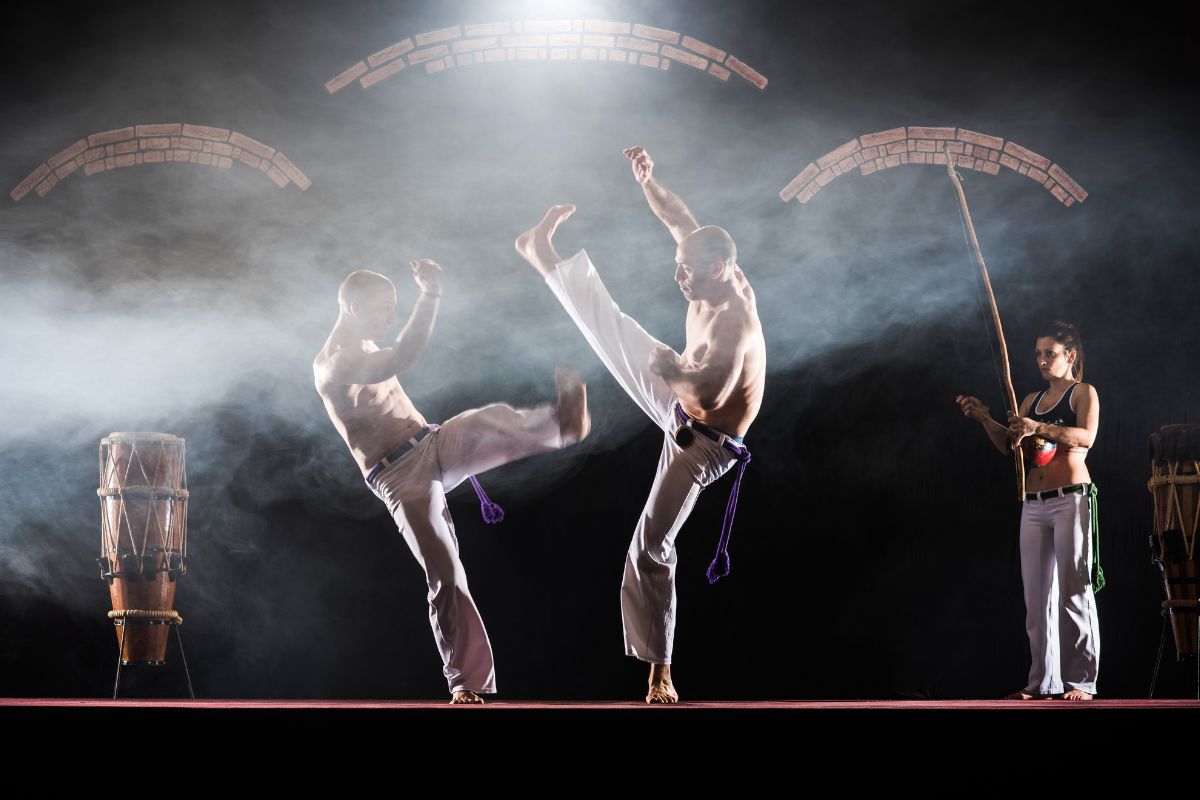
As we explore the fundamental elements of capoeira, we encounter music. Music is an integral part of capoeira, as it provides rhythm and intensity to the performance.
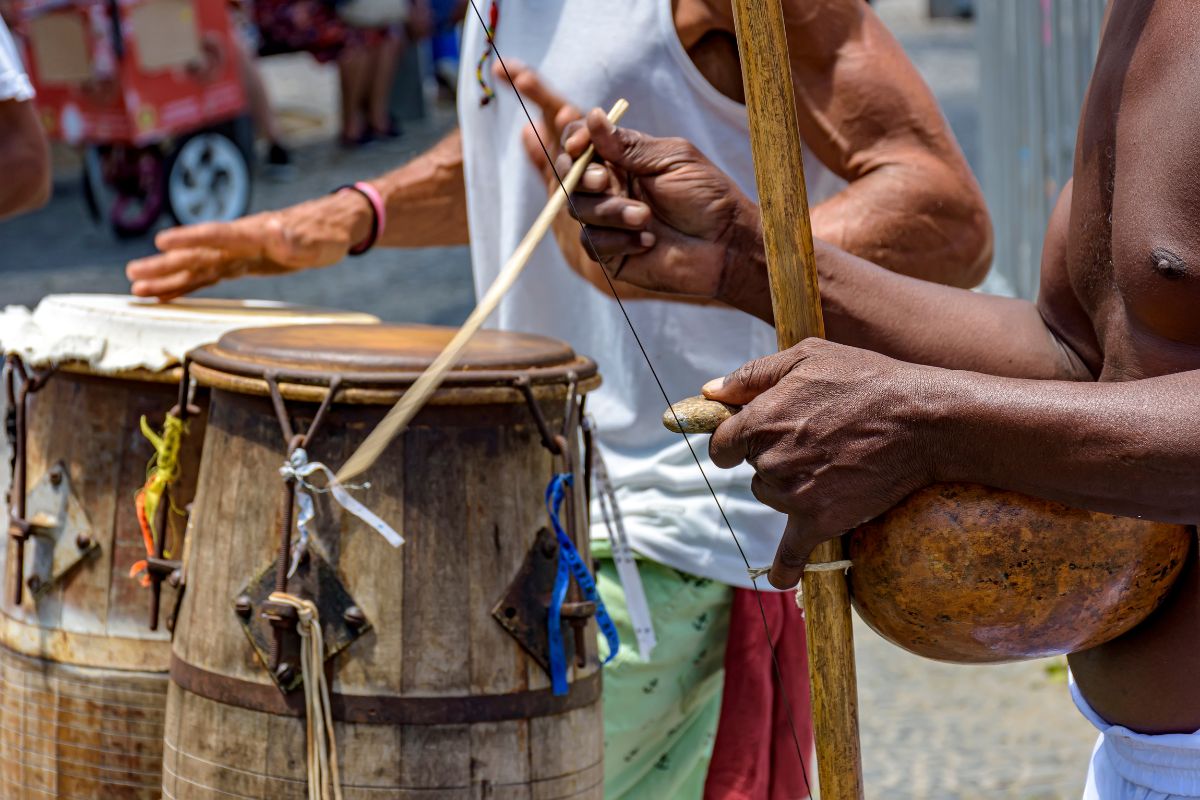
The primary musical instrument used in capoeira is the *berimbau*, a single-stringed bow instrument. In addition to the *berimbau*, other musical instruments accompany capoeira, such as the *pandeiro*, *atabaque*, and *agogô*.
The benefits of capoeira
Capoeira offers numerous unique benefits for both body and mind. Those who practice capoeira gain strength, coordination, and balance, while also developing their mental faculties. It is an art form that combines various elements, such as dance and music, and you can begin practicing it at any time.
Born on November 23, 1900, in Salvador, Brazil, Mestre Bimba is recognized as the father of modern capoeira, having made significant contributions to the development and spread of this martial art. He remains an iconic figure in the world and history of capoeira.
If capoeira has piqued your interest—or if you’d like to explore other activities that blend movement with creativity—you can discover new experiences and find what you enjoy most at HobbyDetective.
HobbyDetective Spain is preparing its community and experiences. Explore what is coming next. HobbyDetective
Your first step in Spain
Look for an introductory session at workshops or cultural centers in your local area. Compare the techniques being taught, the materials provided, the size of the group, and whether you will be able to complete a project during the class. If you plan to practice at home, start with a small project and purchase only the necessary materials; always check the manufacturer’s instructions, and ensure proper ventilation and the use of appropriate protective gear for each product.
Original article: 2024-08-09. Edition adapted for Spain: 27 October 2026. Read the Greek original. Original author: Eleni Agiou.