Tufting: what it is and why it has become so popular
Have you ever seen someone use a peculiar machine to push yarn through a piece of fabric, only to end up with a full-sized rug a few hours later? That’s tufting. And yes, it’s just as rewarding as it sounds.
Tufting is a technique used to create rugs and other decorative items—essentially “painting” with yarn on a special type of fabric. The primary tool is a tufting gun, a small, handheld electric device that feeds yarn through the fabric at high speed.
The result? Colorful rugs, patterns, shapes, abstract designs—in short, anything your imagination can conceive, provided you have a little patience.
If you’ve been watching tufting videos and thinking, “I want to try this, but where do I even begin?“—you’ve come to the right place. Let’s explore what tufting is, how it works, and what you’ll need for your first project.
What is tufting?
Simply put, tufting is a way to create a textured surface using yarn. Instead of weaving a rug, a tufting gun is used to attach yarn to a special fabric. And this is where the fun begins.
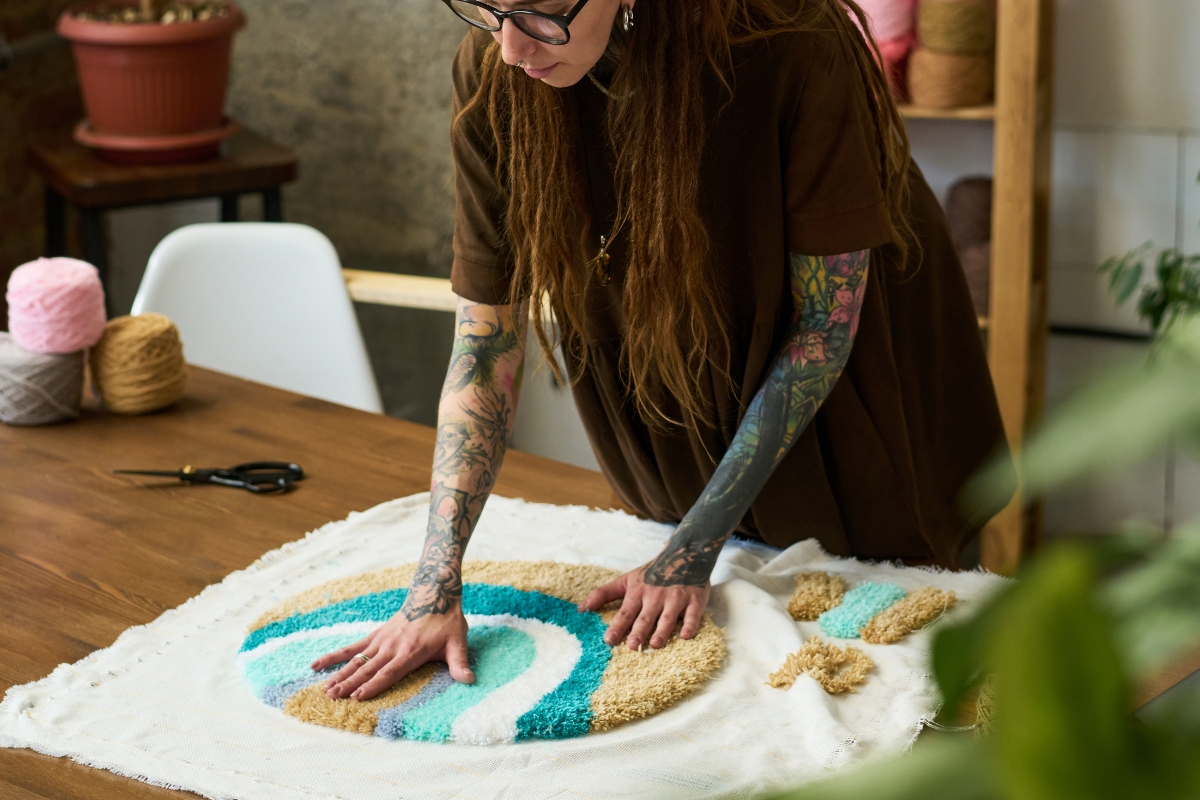
You can start with a simple design—a flower or an abstract pattern, for example—and gradually fill it in with different colors. By the time you’re finished, you will have transformed a design into a fluffy, three-dimensional creation.
But don’t limit yourself to rugs. You can use the same technique to create wall art, decorations, cushions, and other textile projects.
How is tufting done?
The process seems more complicated than it actually is. In practice, it consists of a few basic steps:
1. Choose your design.
It’s best not to start with Guernica. For your first project, a simple design with clean lines is much more advisable.
2. Stretch the fabric over the frame.
And when we say stretch, we mean stretch it really well. The fabric must be stable for the machine to work correctly.
3. Thread the yarn into the tufting gun.
4. Start tufting.
Yes, tufting. We’re not sure if that’s an official term, but once you’ve done it enough times, that’s what you’ll start calling it. The gun feeds the yarn through the fabric, creating either loops or cut pile, depending on the type of tool.
5. Fill the design with color.
And this is where the project really starts to take shape.
6. Apply the finishing touches.
Attach the backing and the lining, trim the pile, and have a little patience until you reach the final result.

What do you need to start tufting?
Here is the list you were likely looking for before arriving at this article.
Tufting gun
The star of the show. There are tools for cut pile and loop pile, which create different textures.
Frame
This is where you will stretch your fabric. It doesn’t have to be anything complicated, but it must be firm enough to work on properly.
Primary tufting cloth
The special fabric you will work with. It’s what will hold all the yarn, so don’t just choose one at random.
Yarn
This is where you can start buying every color imaginable, because you will definitely need them. To begin, choose a few colors that go well with your design. You can use acrylic, wool, or other types of yarn, depending on the project and the tool.
Scissors or a trimmer
Because finishing the tufting process doesn’t mean your project is complete! You’ll still need to clean up and shape the surface.
Glue and backing
To stabilize the project and give the back a proper finish.
How difficult is tufting for a beginner?
Tufting can be done by beginners, but it requires some practice to get used to the movement of the tufting gun, the speed, and the proper tension of the fabric. For your first project, it is best to start with a small size and a simple design.
5 common mistakes when tufting
- Not stretching the fabric enough.
- Starting with a design that is too large or complicated.
- Moving the tufting gun at an inconsistent speed.
- Using the wrong fabric.
- Underestimating the finishing process.
How can I get started with tufting?
If you want to try tufting without having to invest from scratch in a tufting gun, a frame, fabrics, and all the necessary tools, a beginner’s tufting workshop can be an easier way to get familiar with the technique and see if you enjoy it.
HobbyDetective Spain is currently building its community and catalog of experiences. In the meantime, use these ideas to explore local options, and be sure to confirm the most up-to-date information directly with each organizer.
Your first step in Spain
Look for an introductory session at workshops or cultural centers in your municipality. Compare the techniques being taught, the materials included, the group size, and whether you will be able to complete your piece during the class. If you plan to practice at home, start with a small project and purchase only the materials you need; always check the manufacturer’s instructions, and ensure you have proper ventilation and the necessary protective gear for each product.
Original article: 2026-10-03. Edition adapted for Spain: 27 October 2026. Read the Greek original. Original author: Eleni Agiou.